
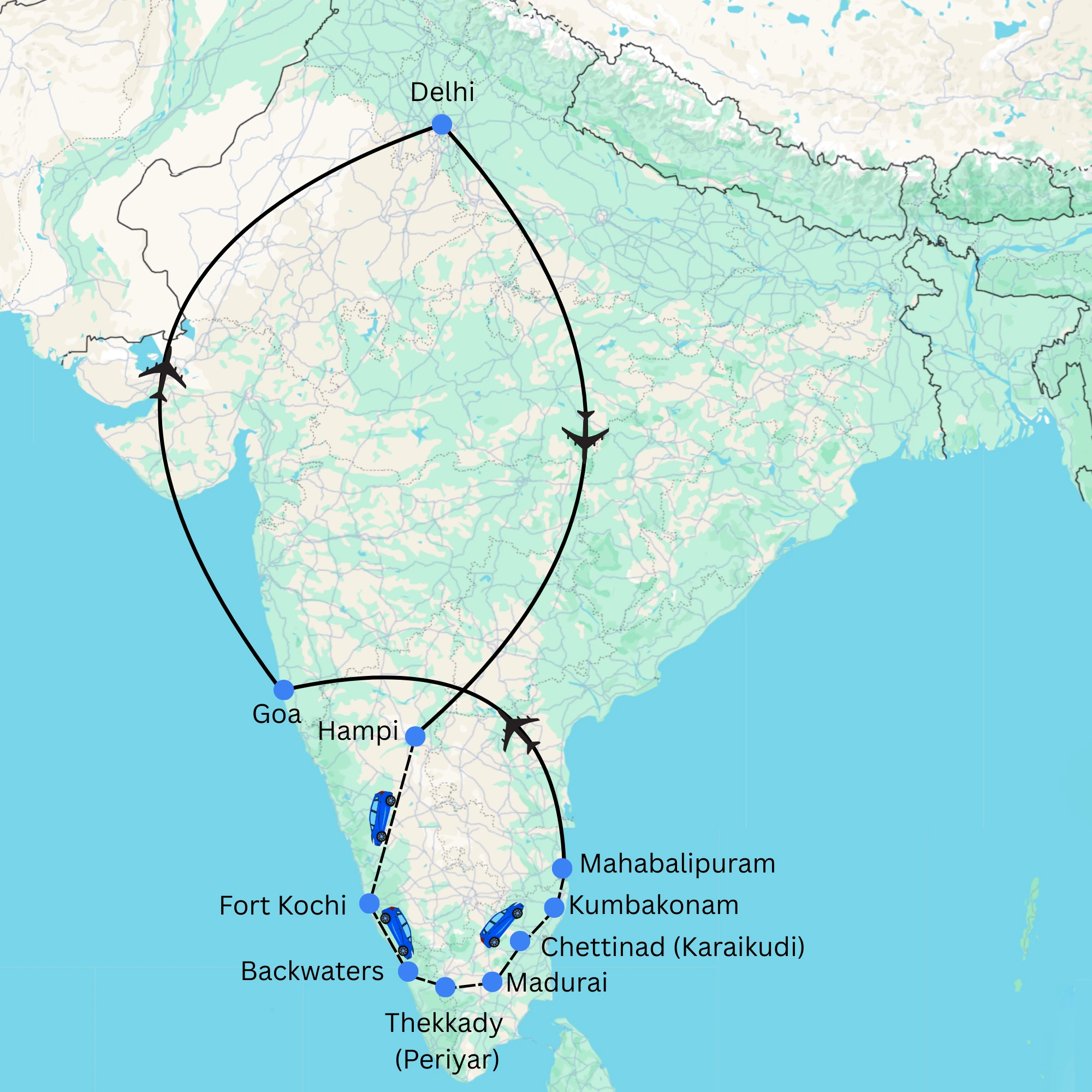
South India's Best Places Journey
All Activities Are Optional/Flexible
Day 1: Arrive at Delhi International Airport.
Fast Track Arrival Services. Meet your assigned representative from Fast Track Arrival Services as you exit the jet bridge from your plane at Delhi Airport. You are privately escorted through the complete arrival process, including immigration, baggage claim, and customs. Most international flights arrive in the evening or at night, and we recommend arriving a day earlier to recuperate from jetlag and safeguard against flight delays. An additional night can be added at the time of reservation.
Bangalore Arrival Option. Bangalore arrivals can avail the same services there and get a flight cost reduction.
You are driven to the luxurious Oberoi Gurgaon (near the airport) and assisted with your check-in if it is 3 pm or later. The next day’s plans are briefly reviewed, and you are at leisure for the remainder of the day.
(Overnight – Oberoi Gurgaon)
Day 2: Delhi – Hubli – Hampi. You are driven to the airport where you will check-in for your direct flight to Hubli. Arrive at Hubli Airport and you are greeted by your South India Guide and ushered to your chauffeur driven vehicle. You are driven to your lodging next to the spectacular UNESCO World Heritage Site of Hampi.
Upon arrival in the late afternoon, you are assisted with your check-in at your gorgeous suite at your opulent resort. Dinner is included every night at your resort. For architecture, history, and scenery buffs we recommend adding an additional day in Hampi.
The Great Vijayanagar Empire: Traces of a two millennia old civilization have been found at Hampi, but the UNESCO World Heritage Group of Monuments at Hampi are a mere five to seven centuries old. Hampi was the last Capital of the Great Vijayanagar Empire, and the incredible monuments here are definitely matched by the amazing scenic landscape that is strewn with massive boulders. The landscape is surreal and breathtaking. Amidst hundreds of square kilometers of granite hills and boulders are the remains of a civilization that was unmatched in its heyday.
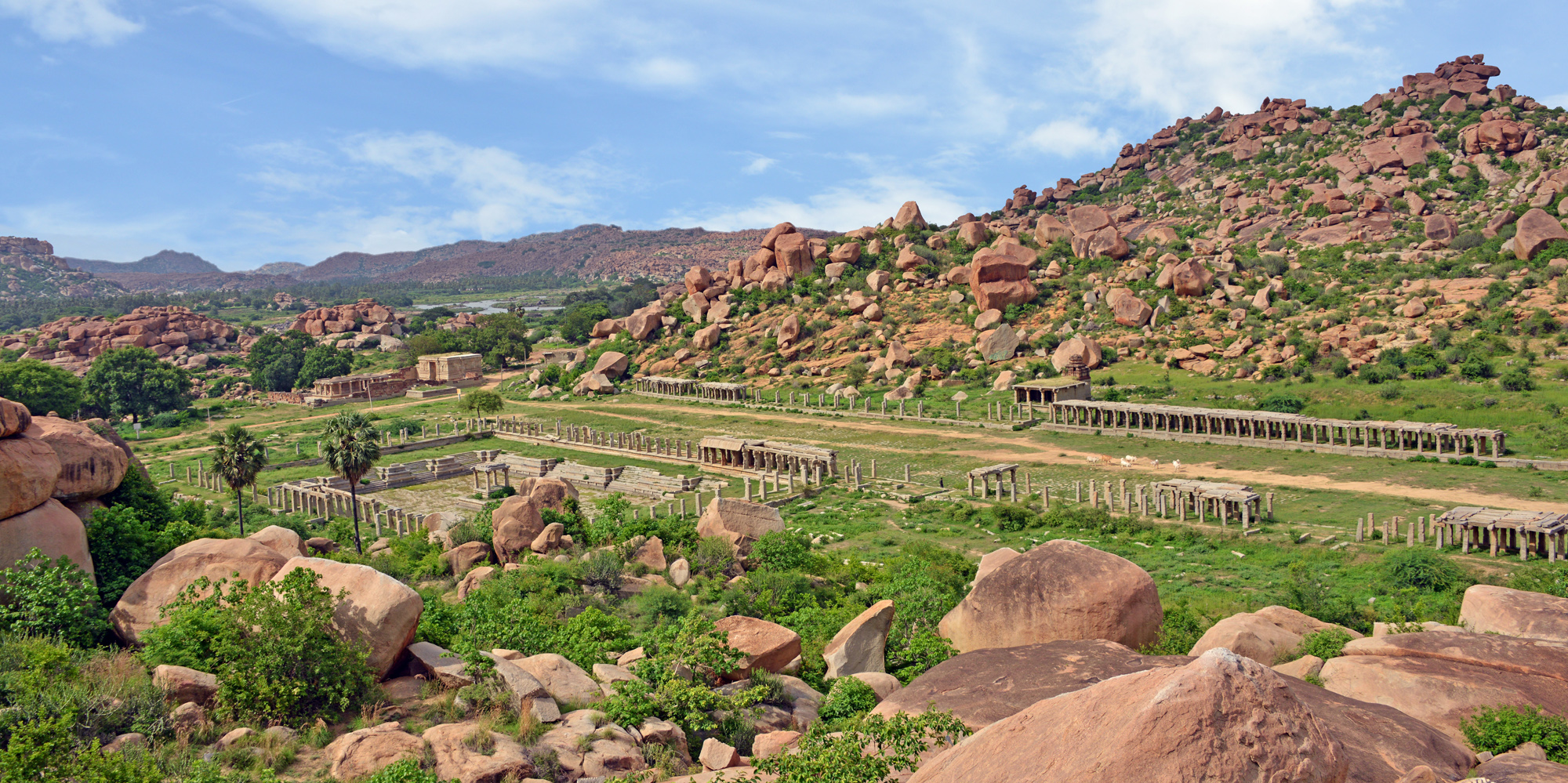
It is our opinion that Hampi, along with the Taj Mahal and the caves at Ajanta & Ellora, make up the most impressive attractions in a country that is overflowing with magnificent achievements of ancient and medieval civilizations. Two days of exploration at Hampi are a must to be able to really savor the amazing city and its granite monuments. Although there is evidence of a civilized society in this region from about 2000 years ago, what you will primarily experience are the remnants of the Vijayanagar Empire that thrived here from the 14th – 17th centuries, and the spectacular otherworldly landscapes.
The estimates of the local population during that period range from over 500,000 to almost a million residents, and the city was said to have been surrounded by an army of about a million soldiers. The streets and bazaars (remnants of which are spread all over the 30 square kilometers of the Site) were so safe that traders sold precious stones in the open. The incredible stone aqueducts dot part of the landscape, as do various tanks and stepwells. Through this other worldly environment flows the picturesque Tungabhadra River, creating an image that a visitor will never forget.(Overnight – Evolve Back Hampi)
Day 3: Hampi. Today focuses on the central zones that define Hampi as a functioning imperial city: its living sacred core and the administrative/ceremonial precincts that supported court life.
Begin in the area around the Hampi Bazaar, once one of the city’s main arteries. The scale of the street itself is part of the experience—long sightlines, pavilion-like ruins, and the sense of a planned urban spine rather than a “market lane.” As you walk, your guide will point out how processions moved through this corridor, where trading and public life concentrated, and how the architecture was designed to handle crowds and ceremony as much as commerce.
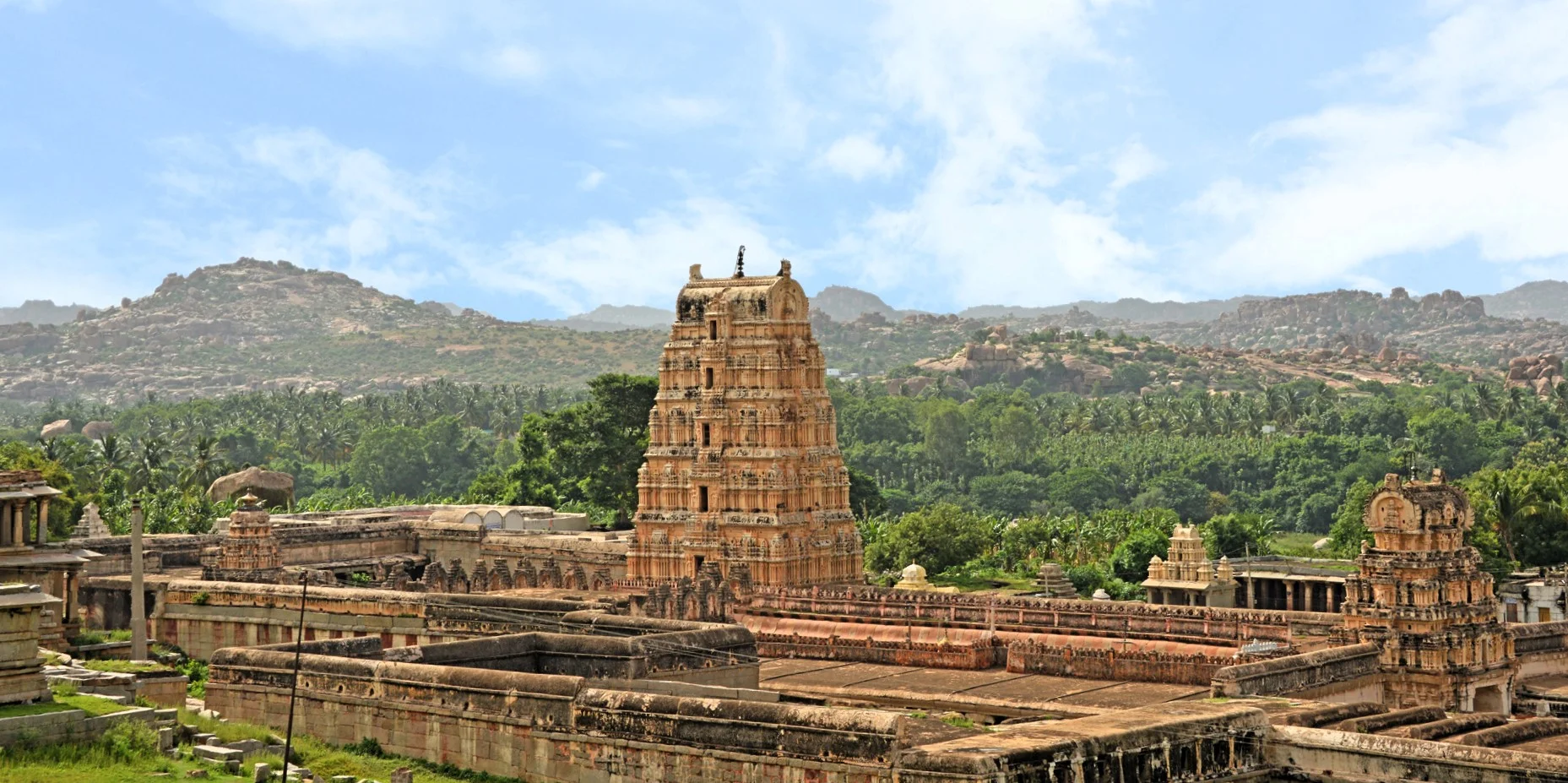
At the end of the bazaar, enter the Virupaksha Temple complex, the spiritual heart of Hampi and an active place of worship. Beyond the headline height of the gateway tower, the visit is about the living layout of the temple: successive gateways, courtyards, pillared halls, and shrines arranged to guide movement inward. You’ll notice how the temple is integrated with the surrounding town and bazaar, and how the scale of the built environment changes as you move from public space to sacred space.
From here, continue into the Royal Enclosure, where Hampi’s imperial character becomes tangible. This zone is not a single monument but a network of spaces—broad enclosures, foundations of former halls, ceremonial platforms, and water structures—laid out with a deliberate logic. Visit the Elephant Stables, notable not only for their symmetry but for how they sit within a larger service-and-court landscape. Nearby, see the House of Victory, associated with royal ceremony and state display.
Continue to key water and ritual structures within the royal precinct: the stepped Pushkarini Tank, where the geometry and craftsmanship of the stonework is as striking as the function, and the King’s Balance, a small but memorable structure tied to court ritual and donation ceremonies. Throughout this section, the experience is as much about the spaces between the monuments—walls, gateways, sightlines, and the way the city’s design frames what you see—as it is about any single building. Return to the resort at any time during the above sightseeing for lunch and/or time at leisure.
Day 4: Hampi. Today balances Hampi’s most celebrated monument complex with the natural landscape that makes the site so distinctive.
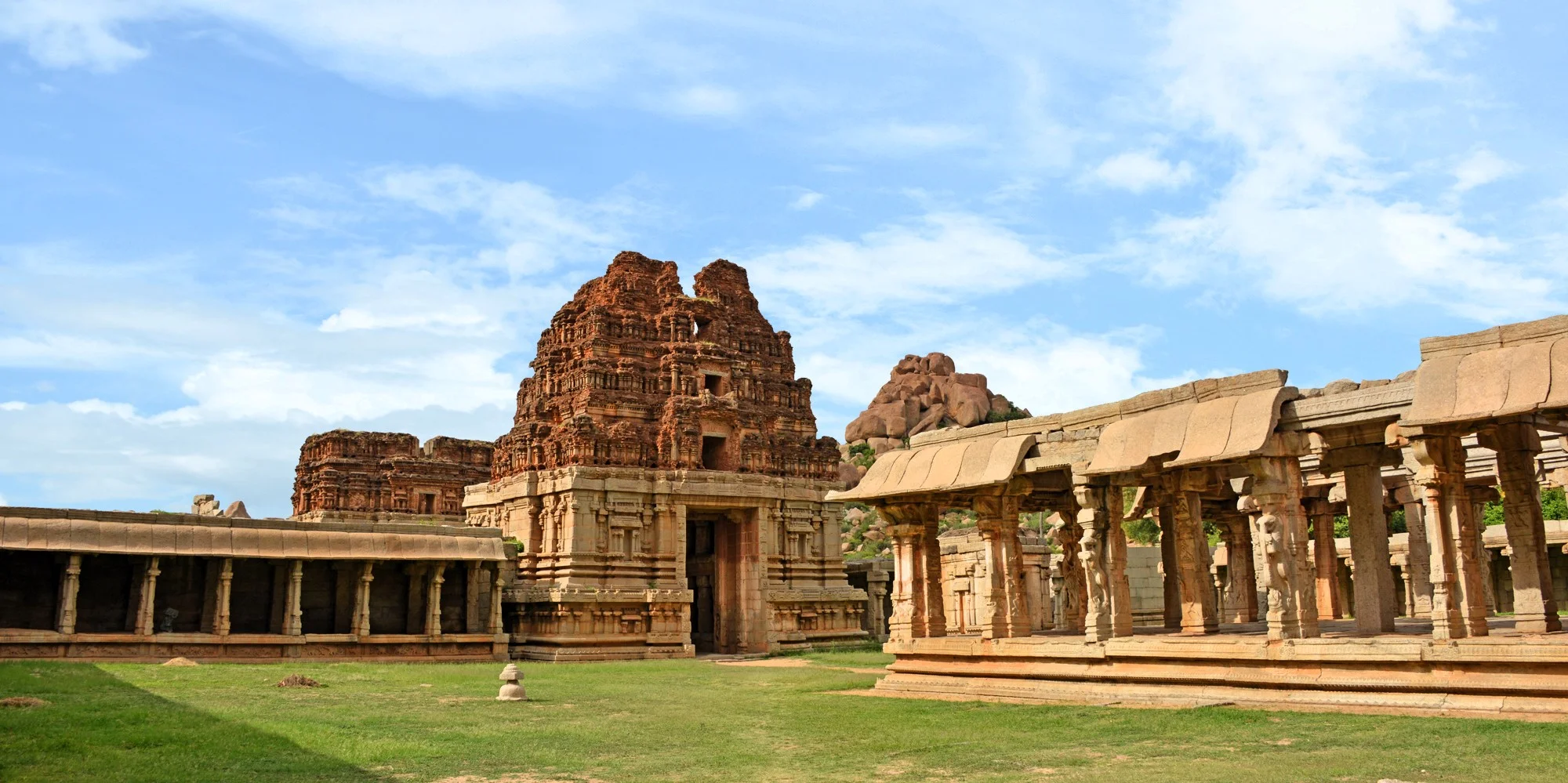
Visit the Vitthala Temple complex, often considered the architectural high point of Hampi. This is a large ensemble rather than a standalone temple, and the visit includes multiple courtyards, halls, and surrounding structures that show the sophistication of Vijayanagara planning. The celebrated Hall of Musical Pillars is part of a broader experience of craftsmanship—proportions, carvings, and the way sound and space work together in the mandapas. The iconic stone chariot is another focal point, but guests usually remember how much there is around it: subsidiary shrines, platforms, and the overall sense of a carefully composed sacred precinct.
After the monument visit, shift to the river side of Hampi for a different perspective. Spend time along the Tungabhadra River, where the landscape becomes the story: granite boulders smoothed by time, palms and cultivated edges, and the calm movement of water through the ruins. When conditions allow, take a coracle ride—a simple but distinctive experience that gives a fresh angle on Hampi’s terrain. From the water, the boulder hills and temple silhouettes feel less like “sites” and more like elements of a single continuous landscape.
Continue to Anegundi, a heritage village on the opposite bank, where the pace is slower and the focus shifts to continuity and daily life. Walk through lanes lined with traditional homes and small shrines, with occasional openings to river views and the surrounding hills. This is not about grand monuments; it’s about seeing the region as a lived-in cultural landscape, not only an archaeological one.
Return to the resort for lunch and a break.
In the later afternoon, head out for Hampi viewpoints, reached via walking paths across the granite terrain. These viewpoints are valuable because they reveal the city’s true scale—boulder fields stretching outward, the river cutting through the valley, and pockets of cultivated green that show how settlement has always been shaped by water and stone. End with sunset, when the low angle of light sharpens the forms of the landscape and makes the entire valley feel more dimensional before returning to the resort.
(Overnight – Evolve Back Hampi)
Day 5: Hampi – Bangalore – Kochi.
You are assisted with your checkout and driven to Bangalore Airport where you will board your flight to Kochi. Arrive at Fort Kochi and you are driven about 1.5 hours to the historic town.
Brunton Boatyard is housed in a beautifully restored Victorian-era building, with architecture that has a harmonious blend of British, Dutch, and Portuguese influences. With its sloping tiled roofs, grand verandas, and vintage-styled interiors, the hotel overlooks the scenic harbor, where guests can watch the daily rhythm of fishing boats, ferries, and ships as they move along the water. They serve amazing coastal Keralan cuisine, which is completely different from usual Indian cuisine as it blends coastal flavors and incredible spices with the many foreign cultures that have influenced the ancient town.
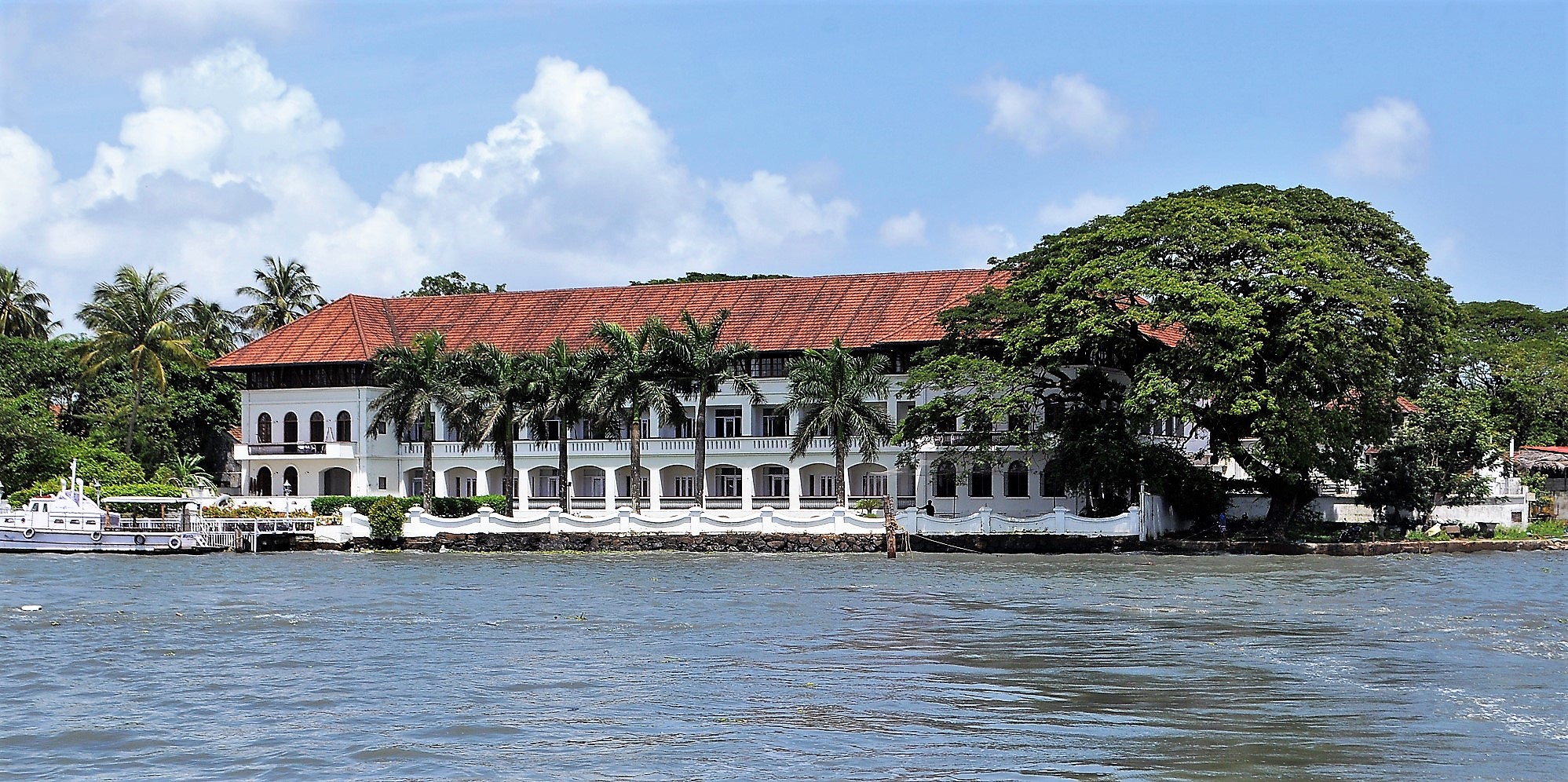
Fort Kochi. With its cobblestone streets and colonial-era architecture, the small town tells the many millennia story of the spice trade flourishing, and the unique convergence of diverse cultures over centuries. In the early 16th century, the Portuguese arrived on these shores, establishing Fort Emmanuel, from which Fort Kochi derives its name. The Dutch followed the Portuguese, and constructed numerous buildings and added more diversity to the cuisine and culture. In the 18th century, the British took control.
Spice Trade & Tourism. Today, Fort Kochi is a charming amalgamation of its historical spice trade roots and contemporary vibrancy. The town’s narrow streets are lined with quaint cafes, art galleries, and boutique hotels that cater to a global clientele. Walking through Fort Kochi, the blend of architectural styles with colonial buildings coexisting with traditional Kerala homes, create a picturesque and harmonious streetscape. Some guests can spend a lot more time in Ft. Kochi just absorbing the patterns of life – from the mornings when little children in crisp uniforms are all over, until the bucolic evenings that transport you back in time.
(Overnight – Brunton Boatyard)
Day 6: Ft. Kochi.
You’ll experience Genuine Dravidian culture on this journey through India’s southernmost states of Kerala and Tamil Nadu. Mainly undisturbed by the North’s migrations and evolution over many millennia, South Indian society had been eco-centric, grounding human life in the rhythms of the land. Hinduism crept in around 600 CE, resulting in an incredibly colorful fusion of culture, architecture, rituals, and traditions.
This day will start with a short walk to the most photogenic of Cochin’s attractions, the Chinese fishing nets. Local fishermen manipulate these massive nets with an ease that comes from centuries of accumulated experience. Ownership of the net and its prized location is handed down from generation to generation. The lowering and raising of the nets, with the fishermen deftly walking up and down the angled wooden poles and manipulating them in and out of the water with thick, well-worn ropes, has a synchronicity and rhythm that is fascinating to observe.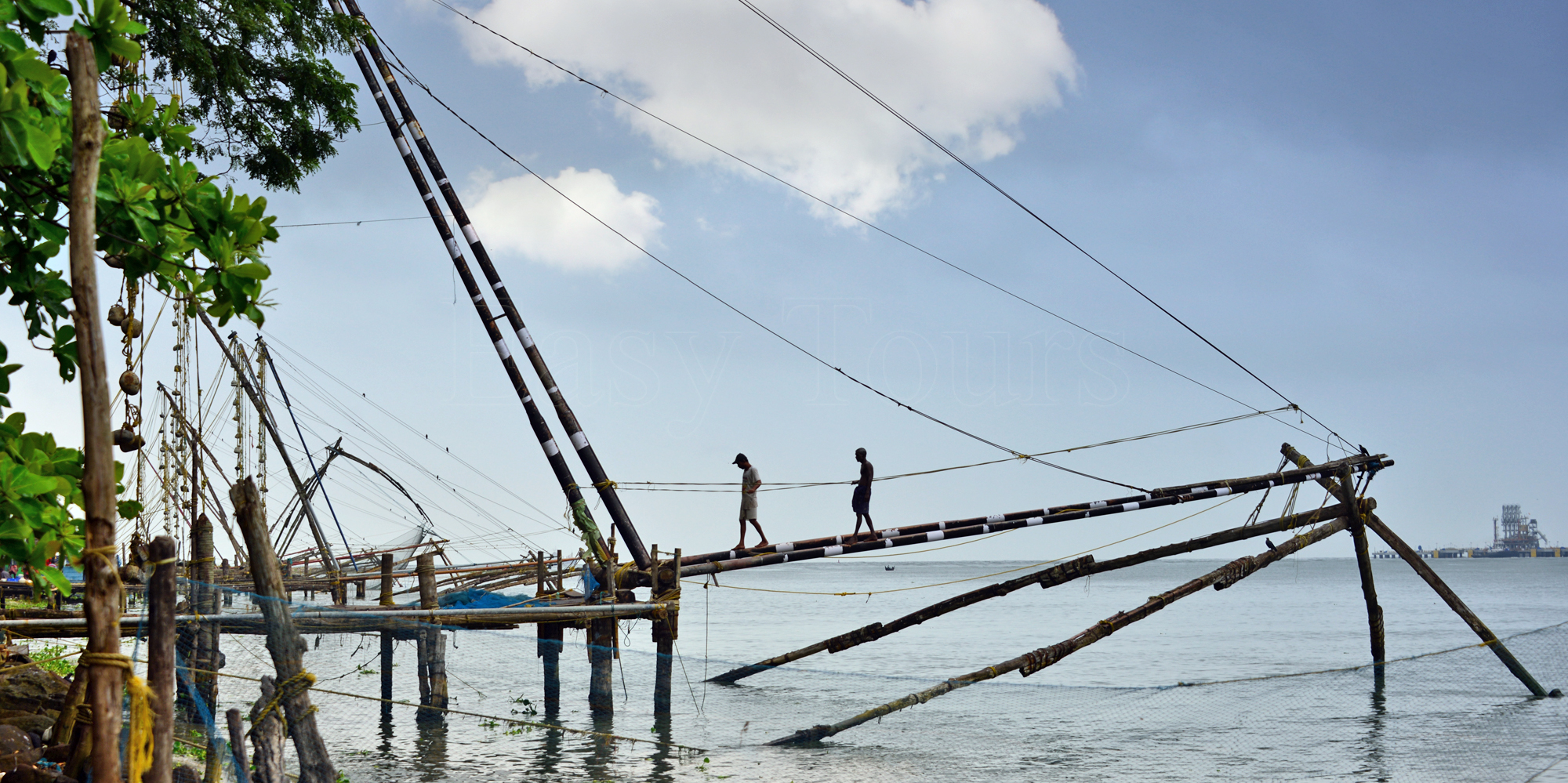
Continue exploring more with an 8-to-10-minute walk or drive through historic Fort Kochi’s charming streets and alleys that are surrounded by Portuguese, Dutch and British architecture, and full of chic small cafes, boutique stores, art galleries, and a lot more.
Arrive at Santa Cruz Cathedral Basilica and experience its impressive collection of colorful artworks. A 5 minute walk from here will bring you to the St. Francis Church, which was established by the Portuguese Franciscan Friars in 1503. This is the first European church built in India, and the famous Portuguese explorer, Vasco Da Gama, the first European to reach India by sea, was buried in its courtyard for a few years before his remains were returned to Portugal.
A 2-minute walk will bring you to David Hall, a 17th century historic building that has been painstakingly restored and houses a rotating selection of art exhibits, often highlighting young artists. We recommend the excellent and popular small café in the building as your stop for lunch, if you are hungry, but there are other alternatives that you can discuss with your Guide. Here the focus is on casual Indian and western cuisine and drinks, including woodfired thin crust pizzas prepared in a tandoor (clay oven) – we strongly recommend trying the seafood topped ‘Fort Cochin’ Pizza!
After lunch you will proceed on a 10-minute drive through Fort Kochi, arriving at the Dutch Palace which was actually built by the Portuguese in 1555 and is famous for its detailed carved wooden murals depicting scenes from the Ramayana and the Puranic legends. Despite being called a Palace, this is a squat building that bears no similarity to the opulence of other palaces, or even mansions, in India.
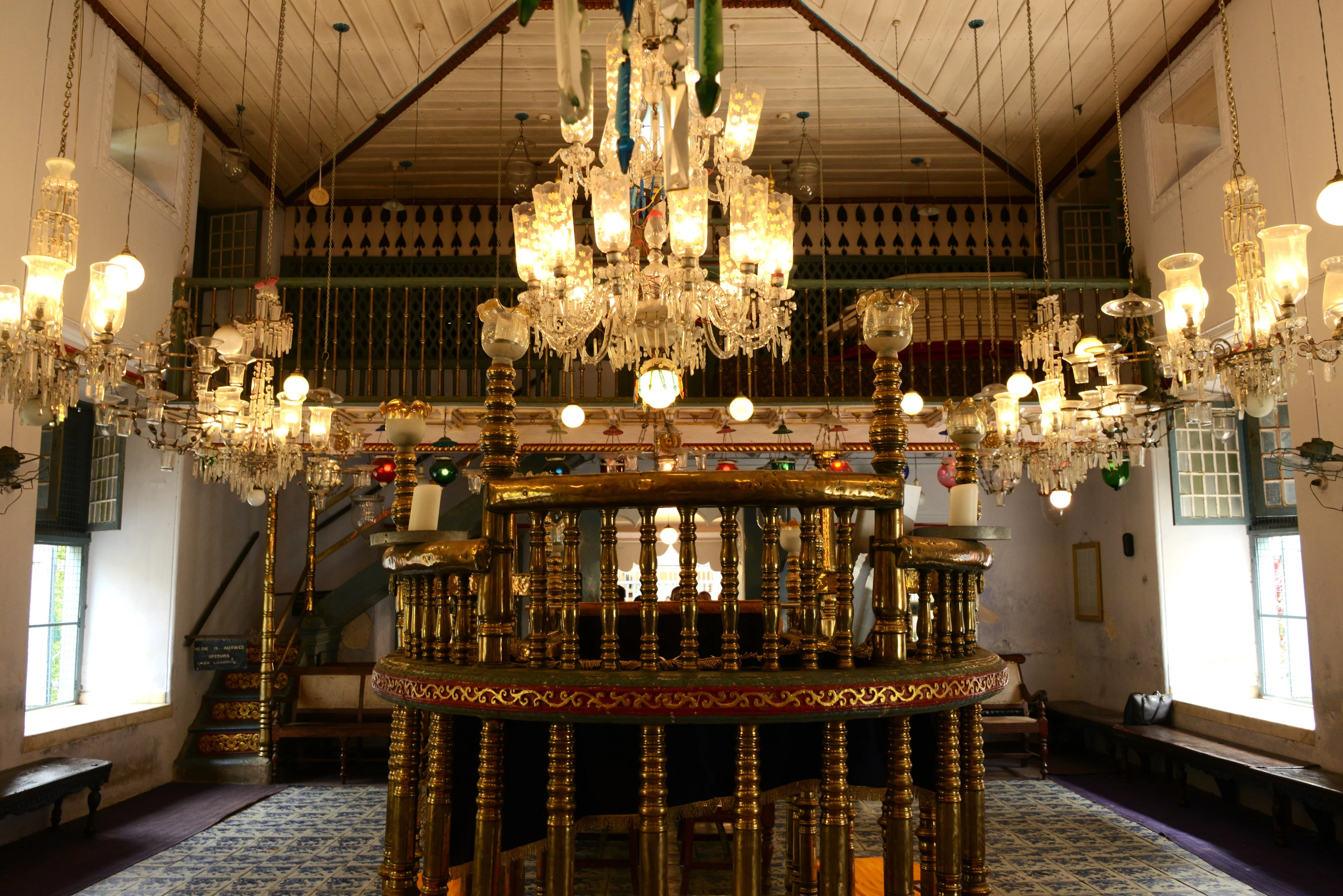
Jewish Synagogue. Very near the palace is the Jewish Synagogue which was built in 1568 and is still an active house of worship for the few remaining Jewish residents in the area. To get to the synagogue you will walk on Jew Street which runs through Jew Town – ancient street signs still identify these names! Fort Kochi’s ancient and colorful Jew Street now has antique stores and souvenir and art outlets. There was a Jewish presence in Kochi from 70 A.D. and the charming synagogue you will visit once was a busy house of worship for the locals.
Optional: In the evening you are driven to an experience that is extremely highly rated by many of our guests. You will be hosted by a famous Keralan Chef and her family at their home. A Keralan cuisine cooking lesson will be followed by a delicious dinner, along with an interesting conversation about life in historic Fort Kochi. You will be asked about this option soon after reserving your tour.
(Overnight – Brunton Boatyard)
Day 7: Ft Kochi – Backwaters.
Check-out from your resort at any time before noon and you will enjoy a fascinating hour and a half drive to Alleppey where you will be assisted in boarding your private houseboat. With advance notice, your guide is available to accompany you on the full day cruise, until you disembark at your resort before sunset. You may carry a bag to refresh yourselves while the rest of your luggage is delivered to your resort.
Most descriptions and photographs of Kerala’s backwaters capture the incredible lushness of the vegetation surrounding the freshwater canals, rivulets, and lakes. The charming waterways, framed by coconut palms and other exotic plants, create a subtropical environment unlike anywhere else on the planet.
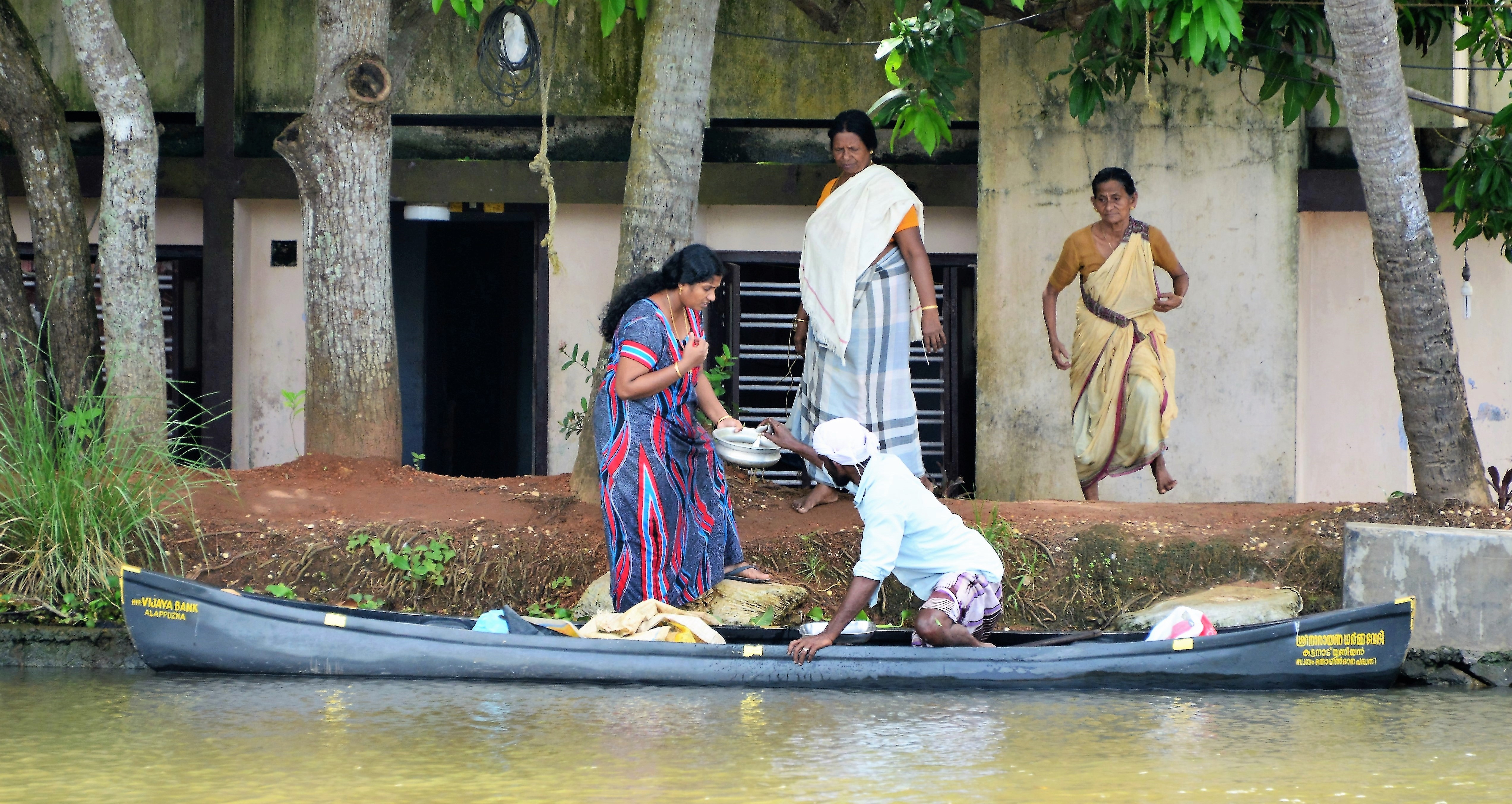
But, for many of our guests, the most enchanting aspect of the cruise is the chance to step into a way of life that has remained largely unchanged for centuries. Here, you are quite literally witnessing life as the locals have lived it for generations. Although small dirt tracks and paved roads now connect many homes and hamlets, the waterways have always been the lifelines of this region, and they remain so today. What might appear to you as streams are, in fact, the locals’ streets and alleys — and much of the time you are gliding right past their backyards. As you take in this vibrant tapestry of daily life, your onboard crew ensures your comfort and care, serving a freshly prepared lunch when you’re ready.
During the cruise you will see men, women, and teenagers rowing themselves to their destinations; small children in crisp uniforms being ferried home from school; women washing clothes and dishes in the streams; fishermen and produce sellers paddling up to back doors to sell their wares; farmers tending their fields; pier stations where commuters wait for longboats; and children swimming and playing in the shallower waters.
Kumarakom Lake Resort. As sunset approaches and all houseboats anchor at the shores of the lake, you will disembark directly at the jetty of your gorgeous lakefront resort. The resort is set on expansive, lush grounds dotted with coconut palms and tropical gardens. The architecture has traditional intricately carved wooden exteriors, and you are invited to learn about their culture through culinary offerings and wellness services, and opportunities to witness local village life and the region's rich biodiversity. You are staying in their top villa located next to the tranquil lake.
(Overnight – Kumarakom Lake Resort)
Day 8: Backwaters - Thekkady (Periyar).
Drive to the Western Ghats (UWHS).
You are assisted with your check-out and driven 4 hours to Thekkady. All drives in Kerala are scenic, but the second part of this drive is through the magical Western Ghats, a UNESCO World Heritage Site and one of our planet’s biodiversity hotspots. During the drive you will have photo opportunities at pastoral hamlets and various lush plantations that grow tea and other crops.
Tea Plantation Tour. About 20 minutes before you arrive at your lodge, you will stop at Vandiperiyar for a guided tour of one of South India’s premier tea estates, The Connemara Tea Factory, which has a century plus legacy of making fine tea. Your guided tour begins with a walk through lush green plantations, where the expert guide explains the art of cultivation and the region’s rich tea-growing heritage.
Tea Factory Walk. Inside the factory, you’ll witness each stage of production—withering, rolling, fermenting, drying, and grading—as age-old machines bring the story of tea to life. This is followed by a tea-tasting session, where you can savor freshly brewed varieties and pick up insider tips on brewing the perfect cup.
Arrive at Thekkady and check-in to your wonderful nature resort. This is the heart of spice country and the pleasant, mild aroma from the surrounding plantations will fascinate you when you arrive.
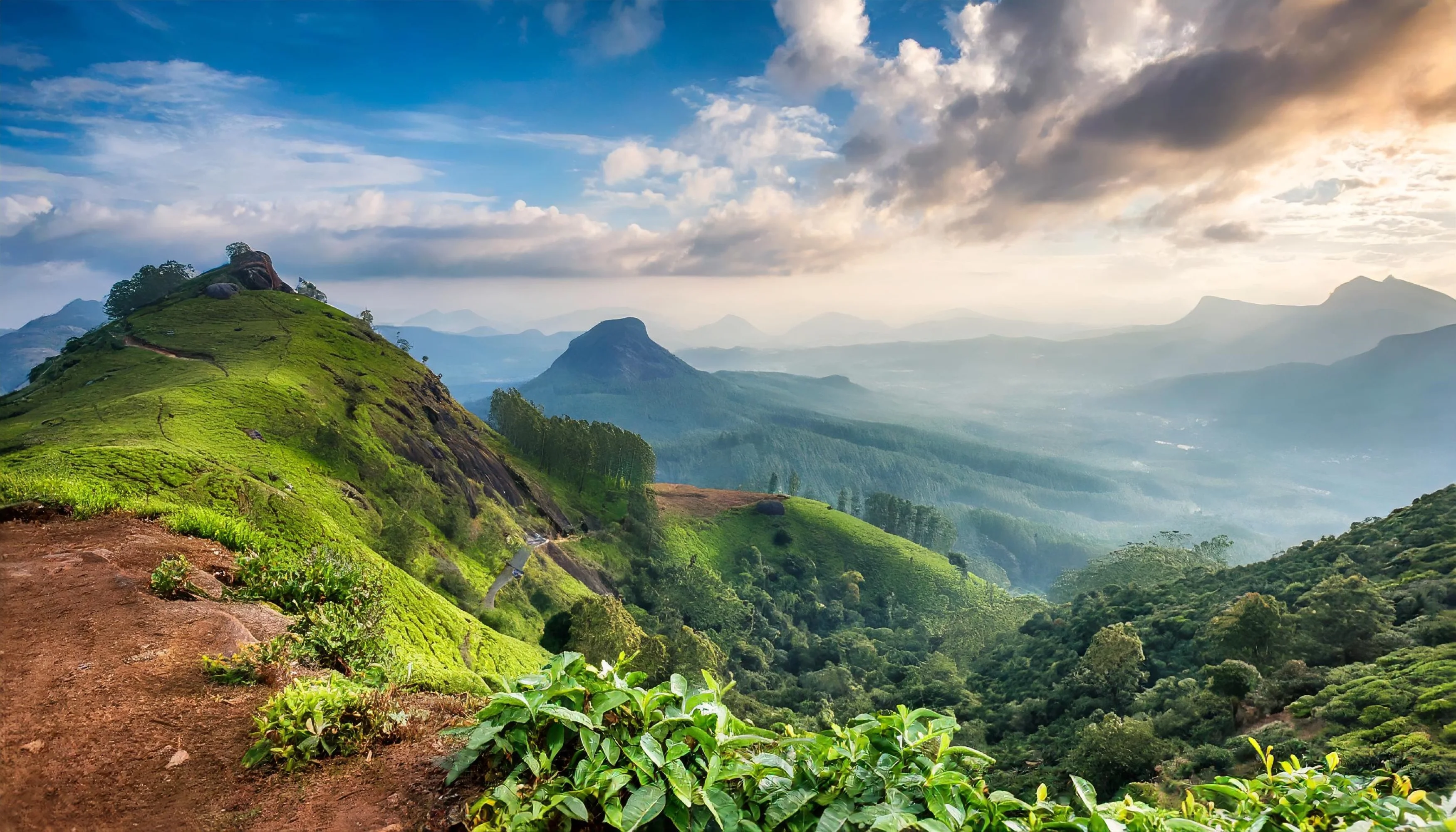 Spice Plantation Naturalist Tour. In the midafternoon you will visit a nearby spice plantation, a lush, shaded world where the air itself seems infused with the fragrance of cardamom, pepper, cinnamon, and clove. An experienced naturalist will guide you along winding paths, introducing you to your choice of different spice plants and explaining how each is grown, harvested, and used. You’ll learn about their medicinal properties, their role in Ayurveda, and their importance in local cooking traditions.
As you walk, you’ll see pepper vines climbing high into shade trees, cardamom pods hidden among leafy undergrowth, nutmeg trees with their precious mace, and groves of cocoa, vanilla, and coffee. The naturalist’s explanations bring to life the centuries-old spice trade that once drew traders from Rome, Arabia, and beyond to these very hills. The mingling aromas of fresh spices, the feel of crushed leaves between your fingers, and the chance to taste or smell raw spices straight from the plant make it a uniquely immersive experience.
(Overnight – Spice Village)
Day 9: Thekkady (Periyar).
Periyar National Park is centered around a tranquil artificial lake, created in 1895 when a dam was built on the Periyar River. The lake winds through the valleys of thickly forested hills, with elevations rising from just a few hundred feet to nearly 6,000 feet. What makes the scene beautifully surreal are the dead tree stumps still jutting out of the water, set against the backdrop of lush, curving hills draped in mist, making the lake a landscape of haunting beauty.
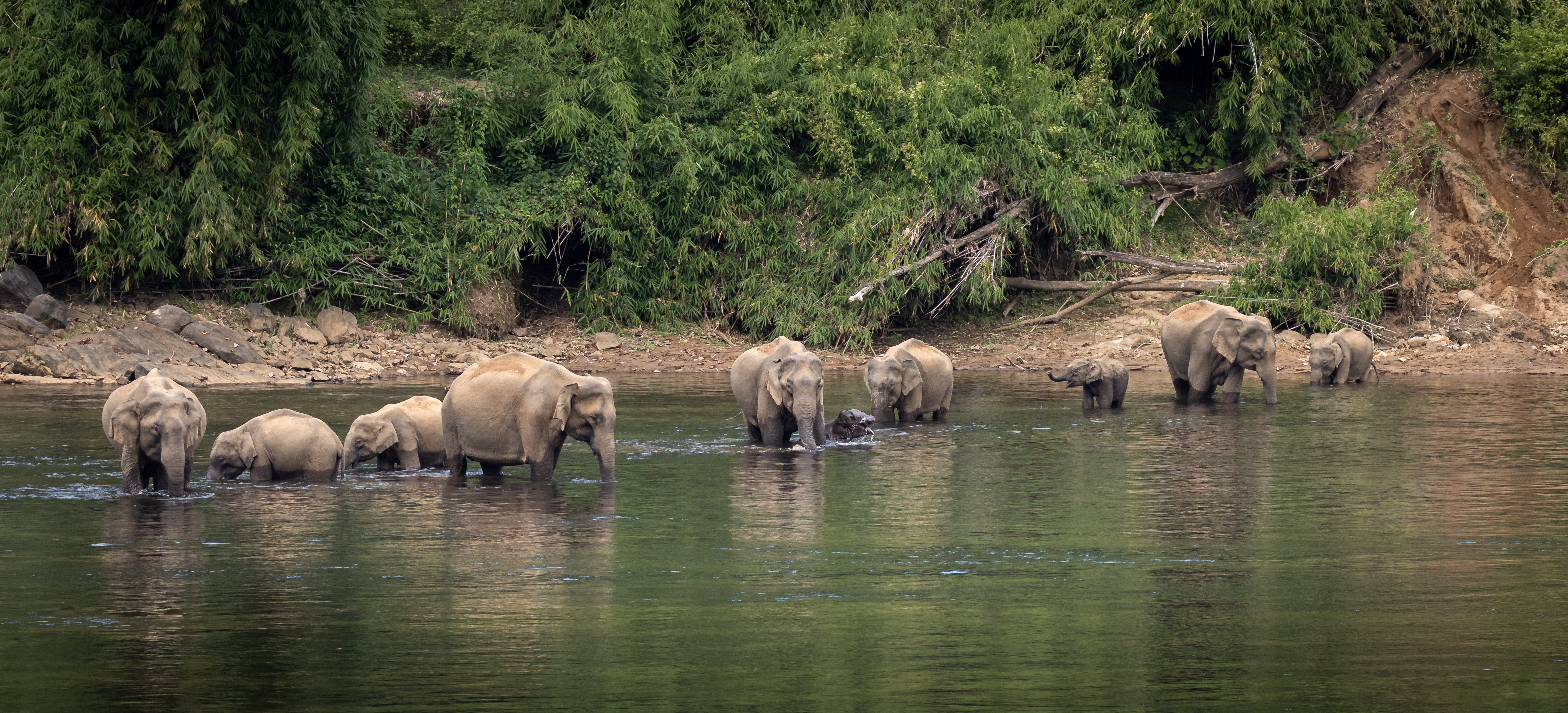
Periyar Lake Cruise. Start your day with a drive up to Lake Periyar and embark on a join-up cruise, along with your guide, on the spectacular lake. Visitors can only enter the park on shared, government-run boat cruises across the lake, or on regular ranger led treks and rafting trips into the jungle. The cruise is included; treks and rafting are upon request. Although Lake Periyar is officially a Tiger Reserve, chances of you seeing a big cat here are almost non-existent.
What is fairly common is to see elephant herds as they come to the lake to drink, or as they traverse the terraced hills surrounding the lake. Wild boar and Gaur (world’s largest bovine) are also fairly common. Yet most travelers agree it is the scenery itself, with its dreamlike mix of still waters, forested ridges, drifting mist, and submerged trees, that makes Periyar unforgettable.
The remainder of the day is flexible – you can explore the charming rural town and region with your Guide and chauffeur driven vehicle, or visit nearby plantations. Your eco-resort and its grounds are a mini-plantation themselves, and the resort staff is proud to give you a guided tour. Cooking lessons with the expert chefs will give you insights of how they use the fresh local spices in food preparation, and the delightful local cuisine.
(Overnight – Spice Village)
Day 10: Thekkady – Madurai.
Another Scenic Drive. You are assisted with your check-out and then you head towards Madurai, a city that is the ultimate expression of the Dravidian culture. Leaving Thekkady, the drive winds gently through verdant cardamom and pepper plantations, with the Western Ghats framing the horizon in rolling green. As you descend, the landscape slowly transforms: tea and spice gardens give way to fertile plains dotted with banana groves, coconut palms, and small village hamlets.
Arrive in Madurai. Then you cross into Tamil Nadu, where the scenery shifts dramatically—drier fields, temple towns, and bustling roadside markets add a new cultural flavor. After the tranquility of Thekkady and the 3.25-hour drive, Madurai greets you with the majestic towers of the Meenakshi Amman Temple, vibrant streets alive with history, and the energy of a timeless cultural capital. You are assisted with check-in to your Colonial Suite in your historic hilltop lodge. The views of Madurai and the legendary temple are excellent from the hilltop location.
More than 2,500 years old, Madurai is the second largest city of Tamil Nadu and an important cultural and commercial hub. It was once the seat of Tamil learning; it is still the area where the Tamil language is spoken in its purest form. The ancient city was built in the shape of a lotus. In contrast with its ancient roots, surrounding modern Madurai is a burgeoning industrial center, surrounded by vast stretches of paddy fields, dusty roads and crowded bazaars.
Evening - Attend the iconic and impressive evening Palli Arai ceremony at the mammoth Sree Meenakshi Temple Complex with your guide. This elaborate and ritualistic ceremony has been written up in many international publications. You will be amazed by the incredible scale and colors that you are about to witness.
(Overnight - Taj Gateway Pasumalai)
Day 11: Madurai.
Meenakshi Temple. The obvious main attraction of Madurai is the great Sree Meenakshi Temple. Built mainly in granite, the complex is a city within a city, spread over nearly 15 acres in the heart of Madurai. Inside, the temple unfolds into a labyrinth of pillared halls, courtyards, corridors, and mandapams. The Golden Lotus Tank at the center adds serenity, reflecting the grandeur of the surrounding halls.
Of note is the Hall of a Thousand Pillars, where every stone pillar is meticulously carved and painted with deities as well as other creatures from Hindu religious annals, and appears perfectly aligned from every angle. Every surface of the temple seems alive with sculpture and color, arguably making it the world’s premier masterpiece of Dravidian architecture.
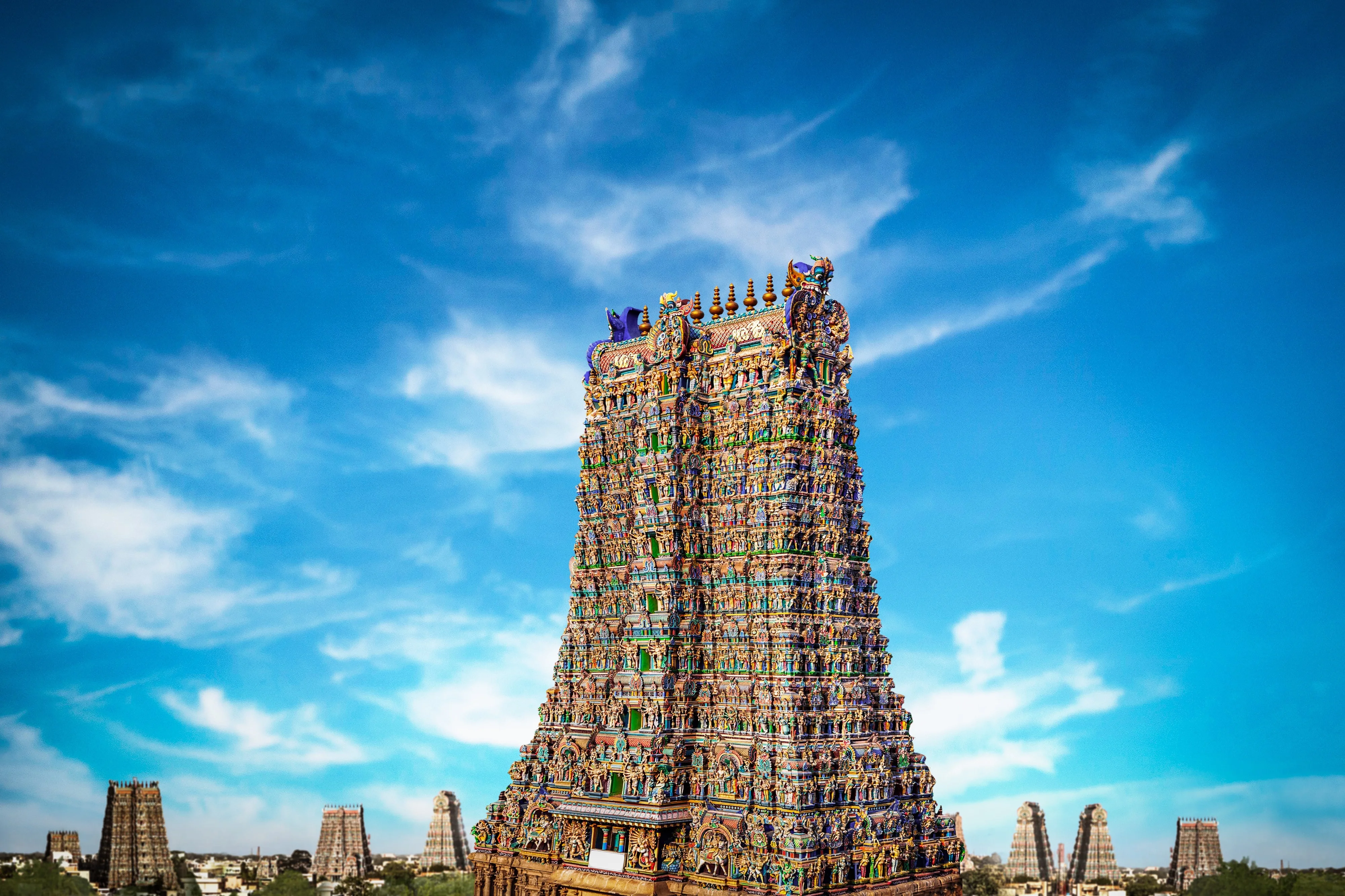
The massive complex includes 14 magnificent Gopurams (up to 170 feet high) that pierce the sky from different areas of the temple complex. These Gopurams have thousands of elaborate sculptures depicting gods, goddesses, demons, and mythical figures carved into their façade, and each of these has been colorfully painted. The magical visual spectacle of the temple just cannot be described and has to be experienced.
The temple’s vast interior is always a beehive of activity as pilgrims come to seek blessings. You will witness Hindu priests performing various ceremonies in different parts of the temple complex as you explore this huge structure, including religious aspects of traditional weddings.
Your stay in Madurai has time for other local experiences, and highly recommended are guided walks through the city’s colorful streets and bazaars. Other attractions include -
Thirumalai Nayakkar Mahal Palace. The Palace was completed by an Italian architect in 1636 AD and was built for the wealthy rulers of the prosperous Madurai Kingdom. The unique Italian Dravidian Palace was once one of South India’s grandest palaces, but today only about a quarter of it remains. However, much of what remains has been restored and the unique grand design is impressive, making this a good stop for architecture enthusiasts.
Gandhi Memorial Museum Madurai. You can also choose to visit the Gandhi Memorial Museum, located in the restored and beautiful Spring Palace of the great 17th century queen, Rani Mangammal. One of the five Gandhi Museums in the country, it is home to a simple but evocative narrative of his life, including items he used, original and reproduced images and letters, and a number of other similar displays.
(Overnight - Taj Gateway Pasumalai)
Day 12: Madurai – Chettinad (Karaikudi).
Drive to Chettinad Region. You are assisted with your check-out and driven a little over two hours to Karaikudi in the famous Chettinad Region. Once you exit Madurai you are in Tamil Nadu’s sun-drenched plains and you’ll pass stretches of paddy fields, tamarind groves, and small farming villages, where rural life unfolds along the roadside. Bright temple towers and roadside shrines often appear, adding a splash of color to the earthy landscape.
Arrival and Lunch. As you approach Karaikudi, the scenery shifts slightly with hints of its unique heritage: Chettinad mansions begin to appear, distinguished by their grand courtyards, wide verandas, and intricate woodwork. Arrive at Karaikudi and break for (included) lunch, which today will be a multi-course Chettinad cuisine (alternatives with prior notice) meal served on a large banana leaf. The incredible flavors that are a combination of multiple Indian and Southeast Asian influences delight those that experience them.
Karaikudi is the capital of the Chettinad region, a fascinating rural area made up of 76 villages and small towns. After lunch you are assisted with check-in at your Chettinad Mansion, an Art Deco boutique gem by CGH Earth hotel with their usual great service and cuisine.
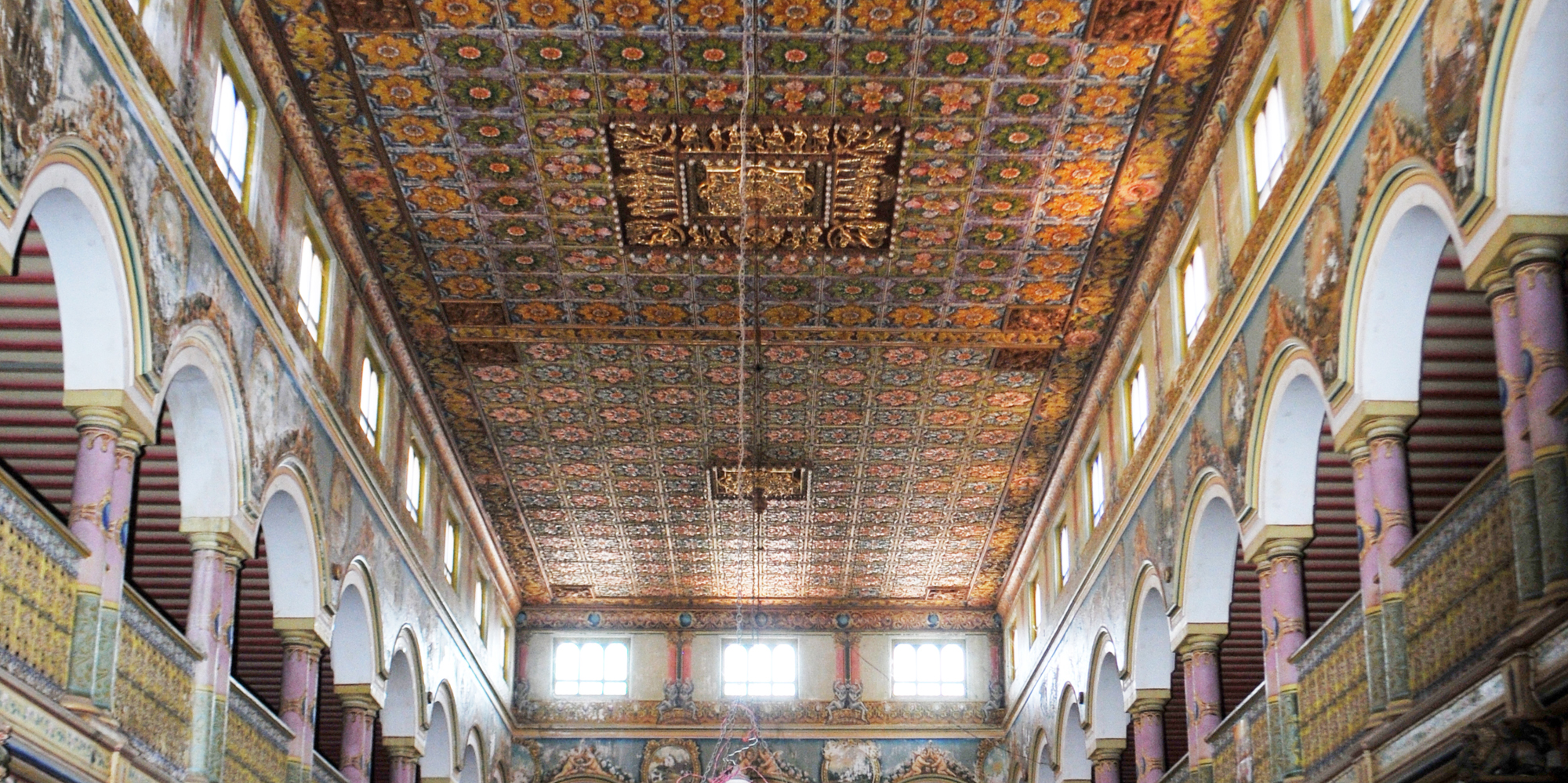
A Chettinad mansion is almost impossible to capture in words. The exquisite carvings, the opulence of imported materials, and the remarkable architectural design come together to create testaments to the artistry, wealth, and cultural vision of the owners — blending Dravidian courtyard planning with Italian marble, Burmese teak, and Belgian glass to create homes unlike any others. The Chettinad region once held over 22,000 mansions. Today, most have fallen into disrepair as families migrated abroad or to big Indian cities.
Chettinad Cuisine. Equally celebrated and created by unique freshly ground spice blends, sesame-oil cooking in special earthen and copper/brass pots, and tangy tamarind gravies, all refined by centuries of South and Southeast Asian trade. The famous banana-leaf lunch, served with a dazzling variety of courses, is an unforgettable experience that delights every visitor.
Ancient Traders. The grandeur of the mansions and the richness of the cuisine are best understood when you learn the history of the Chettiars. As pioneering traders who settled across South and Southeast Asia, they prospered as prominent businessmen and brought back both wealth and diverse influences. They enjoyed an affluent lifestyle on India’s east coast for many centuries, and only migrated to this inland region after a devastating tsunami in the 17th century.
Athangudi Palace.After lunch, you will proceed for an exploration of Chettinad with a short drive through quiet village lanes to the small palace. Here, you’ll explore richly decorated halls where Italian marble, Belgian stained glass, carved Burma teak, and the region’s signature Athangudi tiles blend to create a dazzling example of Chettinad opulence. The guide will walk you through airy courtyards, long pillared verandahs, and grand reception rooms, all the while illustrating the deceptive simplicity of the lifestyles of the wealthy traders.
Athangudi tile workshop. From the palace, a short drive brings you to a traditional Athangudi tile workshop. These workshops still follow the same methods perfected over a century ago: mixing local sand and cement, pouring vivid designs into glass molds, and leaving the tiles to cure under the sun. Watching the craftsmen at work is a fascinating experience—you’ll see how each tile becomes a piece of living heritage. You have the option to try your hand at the process, before heading back to your lodge.
(Overnight – CGH Visalam)
Day 13: Chettinad – Tanjore - Kumbakonam.
Drive to Tanjore. An interesting two-hour drive through the countryside will bring you to the ancient city of Tanjore.
Brihadishwara (UWHS). The Great Living Chola Temples, a UNESCO World Heritage Site, offer an experience entirely different from the temples of Madurai. The original UNESCO selection (before 2 others were added later) is the most awe-inspiring of them all: the Brihadishwara Temple in Thanjavur. This thousand-year-old masterpiece, built entirely of granite, remains one of India’s most treasured architectural achievements. Even today, with all our modern technology, none would attempt to carve such intricate detail or raise such massive stones with the precision achieved by the Chola artisans.
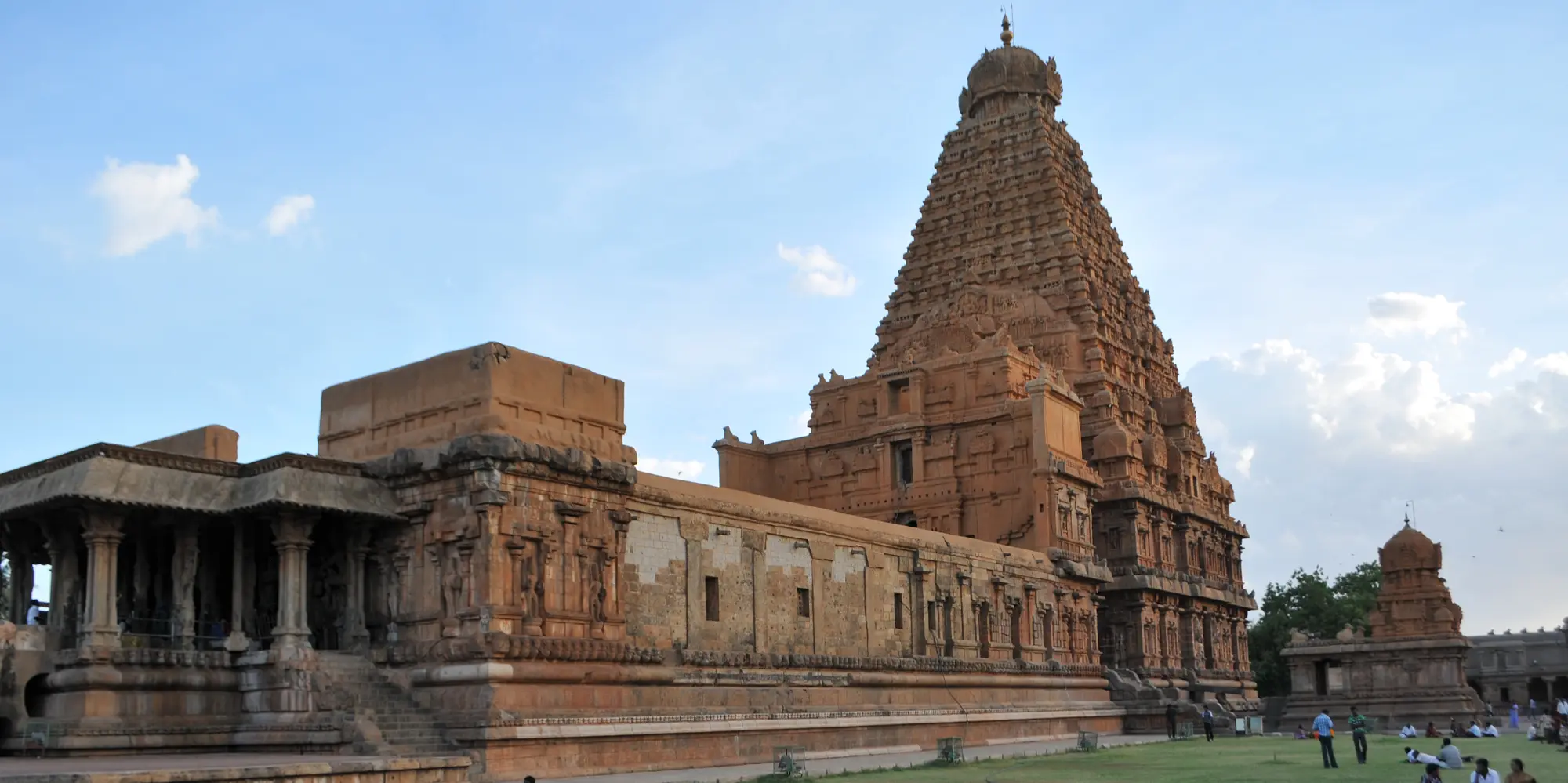
The temple’s crowning marvel is a colossal granite cupola, made up of ten monolithic pieces weighing a combined 82 tons. This cupola was lifted nearly 200 feet to rest atop the 216-foot-high main tower, a feat accomplished over a millennium ago. Every part of the temple radiates grandeur. An immense Nandi (sacred bull) measuring 16 feet long and 13 feet high and hewn from a single block of granite, guards the main shrine. Inside, delicate frescoes still retain their vibrancy after a thousand years, their colors created not with pigments but by grinding naturally tinted stones into fine paste.
Thanjavur Art Gallery. After a break for lunch, your afternoon begins with a visit to the Thanjavur Art Gallery, housed within the historic Nayak palace complex. Whether you are an art enthusiast or simply curious, the experience is deeply rewarding. The highlight here is the gallery’s extraordinary collection of Chola bronzes, masterpieces of the ancient lost-wax process. Gathered from temples across the region, these sculptures are celebrated for their elegance, expressive detail, and timeless spiritual presence. Alongside them, the gallery also showcases stone idols, carved temple panels, and vivid murals, offering a vivid glimpse into Tamil Nadu’s artistic legacy.
Drive to Kumbakonam. In the late afternoon, you’ll set out on the 1-hour drive to Kumbakonam, passing through the lush Cauvery delta with its endless paddy fields, coconut groves, and bustling village scenes.
On arrival at Mantra Koodam, your retreat in the heart of Chola country, you’ll check-in and settle into your upgraded heritage-style cottage with private garden. The retreat is designed to echo the charm of a traditional Tamil agraharam (village street). Besides its service and cuisine, the charming CGH Lodge offers Athangudi tile floors, high wooden ceilings, wide verandahs, and courtyards shaded by trees. The grounds are dotted with temple-inspired structures, serene pathways, and a lotus pond, and, as evening falls, you can relax in the gardens and listen to the sounds of village life around you.
(Overnight - Mantra Koodam)
Day 14: Kumbakonam.
Airavateswara temple (UWHS). The Airavateswara Temple near your lodge is one of the three celebrated Great Living Chola Temples. Although smaller in scale compared to the majestic Brihadishwara, it stands out for its exquisite artistry and attention to detail. Often described as a “sculptor’s dream in stone,” the temple is renowned for the intricacy of its carvings, remarkable both for their refinement and for the fact that they were chiseled out of exceptionally hard stone. Among its most famous features are:
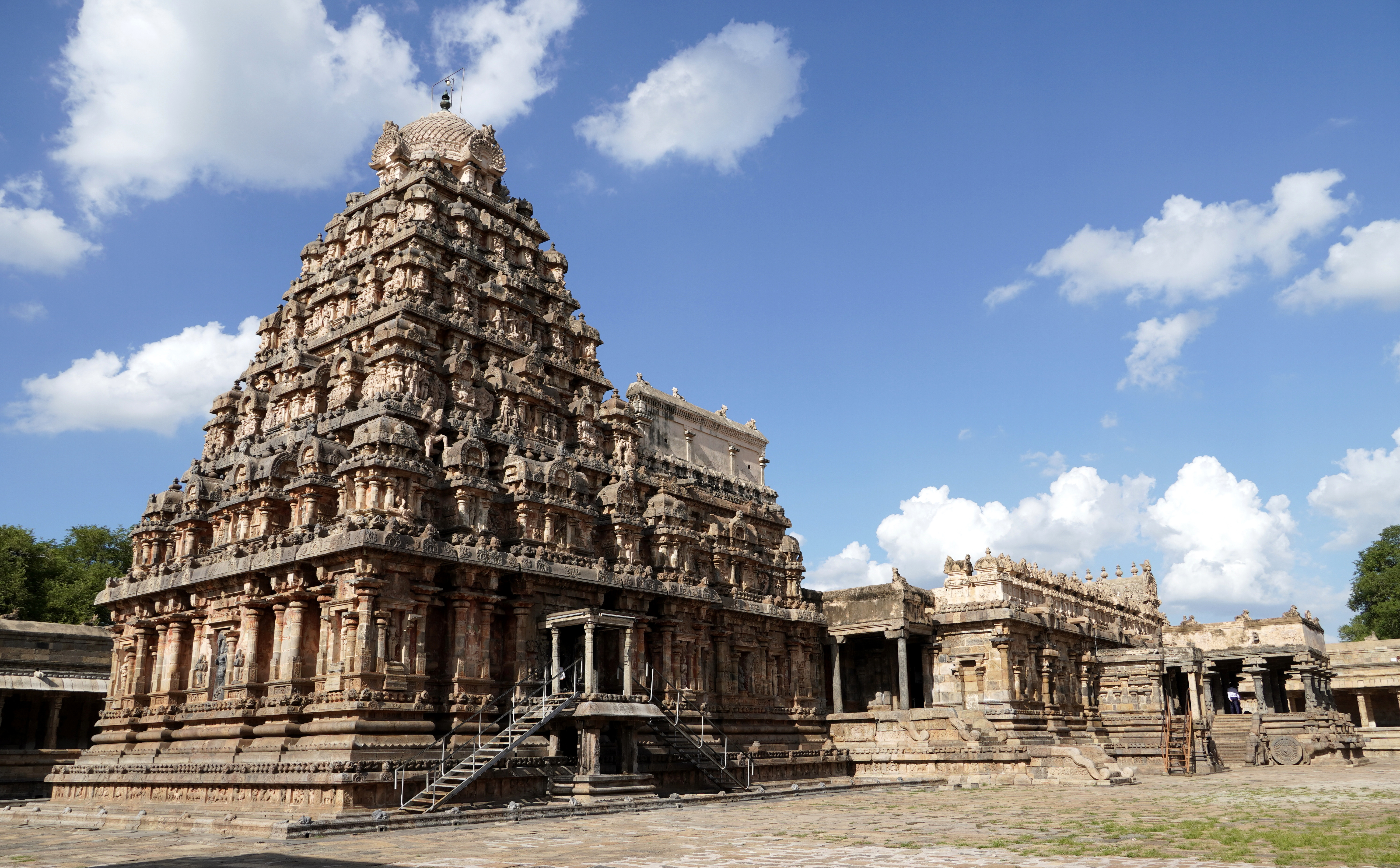
Musical Pillars – finely carved stone pillars that produce musical notes when gently tapped.
Chariot-shaped Mandapam – a grand hall built to resemble a stone chariot drawn by horses, showcasing both architectural creativity and symbolic design.
Paintings and Sculptures – delicate murals and sculptures depicting mythological themes, celestial beings, and daily life, offering an artistic as well as spiritual experience.
There are various other activities available with prior notice for this day, including –
- Kalamkari. Step into artist Rajmohan’s home in Kumbakonam and see how he keeps the ancient art of Kalamkari alive. Using plant-based dyes made from flowers, bark, and roots — and brushes crafted from coconut shells and bamboo — he and his team hand-paint intricate designs on cotton fabric. Each piece is then washed and dried along the river, giving it its signature texture.
- Pattu Silk Weaving. In the backstreets of Kumbakonam, watch master weavers transform silk threads into dazzling saris. Using traditional wooden looms and real gold thread, they create intricate patterns with a skill passed down through generations.
- Lost Wax Casting. At Swamimalai, visit the famed Sthapathi artisans, who have practiced the lost-wax method of bronze casting for over a thousand years. Watch as molten metal is poured into clay molds shaped from wax, resulting in exquisite temple sculptures admired worldwide.
- Bullock Cart Ride. Enjoy a scenic bullock cart ride through the countryside. Pass paddy fields and village lanes, wave to locals, and soak in the charm of rural Tamil life at a slow, peaceful pace.
(Overnight - Mantra Koodam)
Day 15: Kumbakonam – Mahabalipuram (UWHS)
Drive to Mahabalipuram. Check-out from your hotel in the morning and proceed on another fascinating drive that will bring you to Mahabalipuram on the east coast in 5 hours – photo opportunities abound and you are encouraged to stop. Initially, the landscape is a lush patchwork of emerald-green paddy fields, groves of coconut palms, and meandering irrigation canals that have sustained the region for centuries. As the drive continues, the road is dotted with ancient temples—their towering gopurams (gateway towers) rising unexpectedly above the palm trees—reminders of the region’s deep spiritual heritage. Closer to Mahabalipuram and the ocean, the terrain becomes slightly rockier, with low granite outcrops appearing near the road.
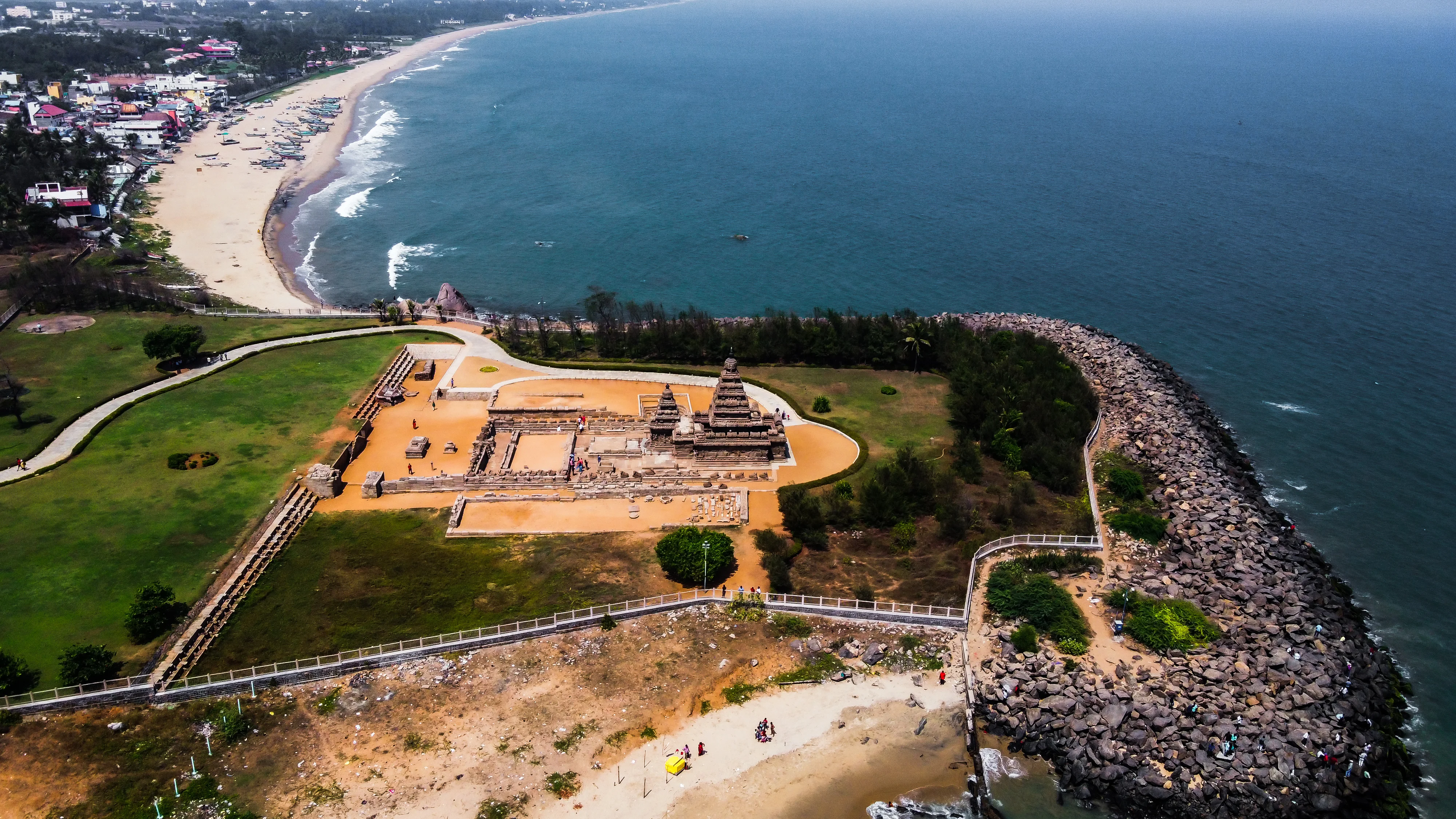
Mahabalipuram. You’ll break for a late lunch upon arrival, after which you are assisted with your check-in to your sea view villa at your oceanfront resort in Mahabalipuram. Mahabalipuram, though best known as a UNESCO City, is first and foremost a small coastal town. The fishing community gives Mahabalipuram much of its daily life. Your lodging is near the ancient sites of Mahabalipuram, and your hotel’s beach has a great view of the 8th Century UNESCO WHS Shore Temple.
Fishing Community. In the late afternoon you’ll enjoy a walk on the beach as this brings you to the local fishing community and their colorful wooden boats. You will see a variety of activities going on – fishermen are going through various processes of pulling their boats up on the beach and the wives are helping in repairing and organizing their nets and other gear. Although most of the trading occurs in the early morning, there are usually some fishermen still bartering with buyers on the beach.
(Overnight - Radisson Blu Temple Bay)
Day 16: Mahabalipuram.
Dravidian Creators. The Pallava Dynasty reigned over most of Tamil Nadu and surrounding regions from the 3rd through the 9th Century, and they reached their zenith between 500 and 700 CE. Their capital was at Kanchipuram (City of a Thousand Temples), about an hour and 45 minutes inland from today’s Mahabalipuram.
Mahabalipuram was their major port, but today it is a visitor’s paradise as it combines a very charming Tamil coastal town with massive rock sculptures carved into softly sloping hills, monolithic temples, ancient manmade caverns with incredible sculptures, and the world’s largest bas-relief in stone, just to name a few. In parts of town, descendants of the original artisans still chip away at blocks of granite with hammer and chisel.
The Seven Pagodas. Begin your exploration at the edge of the Bay of Bengal with the weathered Shore Temple (700 CE Approx.). The lone survivor of a line of seven legendary temples that once stood along the ancient shoreline, their golden tops visible to sailors far out at sea - the other 6 are now submerged in the bay. Perched alone among seated granite Nandis (bulls) with the waves breaking just beyond, it has a unique charm. This was the beginning of Dravidian stone structural building, until now stone temples had only been chiseled out of one rock.
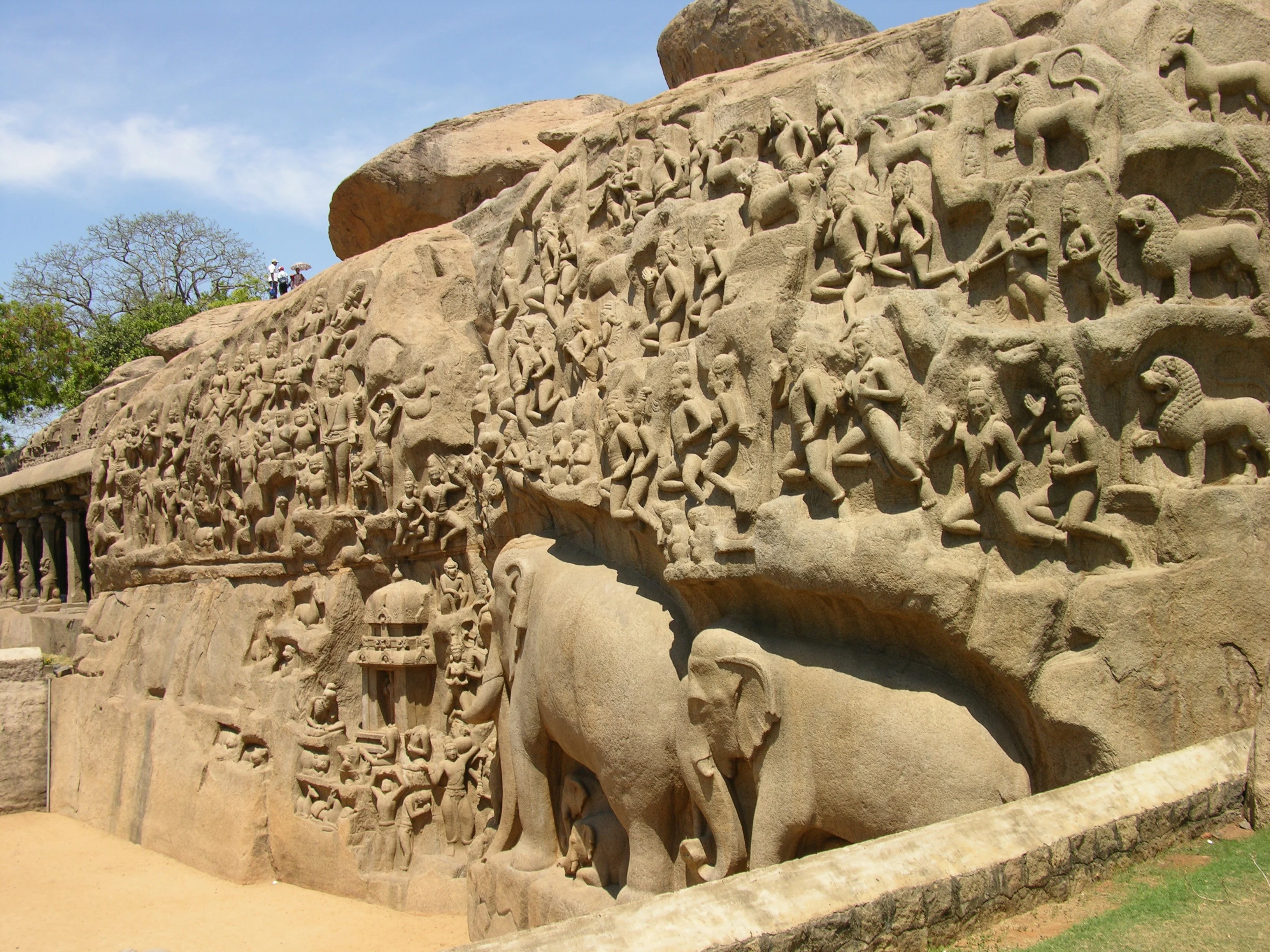
Descent of the Ganga (650 CE Approx). Moving inland, the terrain itself becomes the canvas. Ancient creators carved an even more ancient tale into a natural granite cliff about 90 feet long and 40 feet high. The central theme is the descent of the sacred river Ganga from the heavens to the earth, a story from Hindu mythology. Also known as Arjuna’s Penance, here the creators turned a natural rock face into an unfolding drama. The world’s largest bas-relief in stone is adorned by gods, sages, elephants, nagas, and ordinary men and women, carved with an energy and detail that makes the stone feel animated.
Cave Temples (600 – 700 CE). Scattered nearby on the massive granite hill are cave temples, cut into granite outcrops. Creating these sanctuaries taught the Pallavas enough to construct temples such as the Shore Temple. Famous caves you can visit include:
Varaha Mandapa. Dedicated to Vishnu in his boar (Varaha) incarnation. The relief shows Vishnu lifting the earth goddess Bhudevi from the cosmic ocean.
Mahishasuramardini Cave. Contains two famous panels: one of Durga slaying the buffalo demon Mahisha, and another of Vishnu reclining on the serpent Ananta.
Krishna Mandapa. Known for the large relief of Krishna lifting Mount Govardhan to shelter villagers and cattle from torrential rain.
Trimurti Cave. Houses sanctums for Brahma, Vishnu, and Shiva, representing the Hindu trinity.
Panchapandava Cave (unfinished). One of the largest caves at the site, left incomplete. Its sheer size suggests an ambitious project that may have been abandoned when attention shifted to structural temples such as the Panch Rathas.
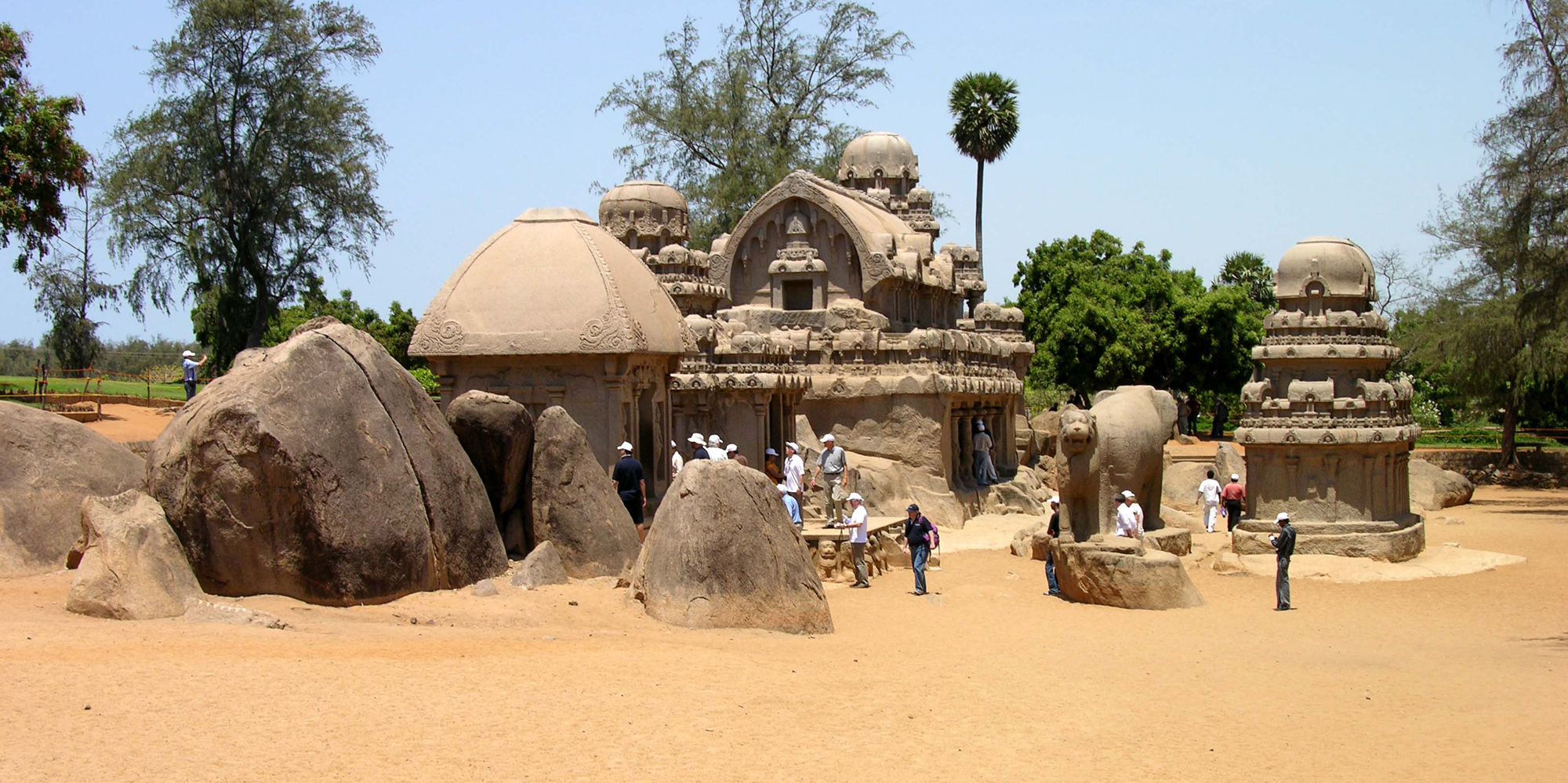
The Panch Rathas. (650 CE Approx.) A short drive will bring you to The Panch Rathas (Five Chariots), which are by themselves a magnificent site. The entire site was carved out of a single granite ridge, and the structures are as large as 36 feet high and 40 feet long! This is not construction but subtraction: the sculptors cut away everything around and between the Rathas, leaving the structures standing free.
The Rathas are adorned with sculpted reliefs of deities, guardians, lions, and elephants. One stone elephant in particular is one of the ancient world’s most lifelike sculptures. Even more unique is the fact that each Ratha explores a different architectural idea — square, apsidal, barrel-vaulted, pyramidal.
But what boggles the mind is that this monumental creation was just practice! None of the Rathas were consecrated or used as functioning temples. Instead, these were prototypes — experiments in different temple forms, presumably later used in full-scale Dravidian temple architecture!
Return to your resort for lunch at any time during this touring, or you can opt for a restaurant slightly closer to the attractions – your guide will make suggestions based on your preferences.
(Overnight - Radisson Blu Temple Bay)
Day 17: Mahabalipuram - Goa.
You are assisted with your check-out from your oceanfront resort in Mahabalipuram anytime before noon and begin the drive (about 1.5 hours) to Chennai. As you enter the city, your guide will give you a brief orientation to Chennai’s coastal layout and historic core before you begin a compact tour of a few key highlights.
Kapaleeshwarar Temple
Your first major stop is Kapaleeshwarar Temple in Mylapore, one of Chennai’s most important Shiva temples. The shrine traces its origins to the Pallava period in the 7th century CE. The soaring, color-saturated gopuram (gateway tower) is covered in an intricate profusion of carved and painted deities, demons, and mythical creatures. Inside, your guide will walk you through a few of the main mandapams (pillared halls), explaining how ritual, sound, and sculpture work together in an active South Indian temple, as you observe worshippers offering prayers and moving between shrines.
San Thome Basilica
From here you continue to San Thome Basilica, originally established by the Portuguese in the 16th century on the traditional burial site of St. Thomas the Apostle. The present neo-Gothic church has a tall white spire rising above the Bay of Bengal. Inside, your guide will briefly outline how this site reflects successive layers of Christian presence on India’s east coast—from early traditions associated with St. Thomas to later Portuguese and British phases.
Optional: Government Museum, Egmore.
Depending on what time you choose to leave Mahabalipuram, you may be able to add a visit to the Government Museum in Egmore, founded in 1851. Your visit here can be tailored to your preferences, but we put emphasis on the Numismatics Collection, where coins spanning almost 3 millennia trace changing dynasties, trade routes, and symbols of authority. The numismatics galleries hold a remarkably wide range of pieces, starting with early punch-marked “Puranas” from as early as the 6th century BCE. There are also massive numbers of Roman gold and silver coins, East India Company issues, and modern commemorative pieces, part of what is considered the largest collection of Roman antiquities outside Europe. Walking these cases with your guide gives you a very fast visual history of trade, power, and cultural exchange across peninsular India, all distilled into metal pieces the size of a thumbnail.
Nearby, a compact outdoor display area holds temple sculptures, carved architectural fragments, and stone panels arranged in quiet courtyards, allowing you to see South Indian sculptural work at close range outside an active temple environment. Your guide will advise on whether there is enough time to include this stop before heading to the airport.
Evening Flight to Goa
At the appropriate time, you are driven to Chennai Airport and assisted with check-in for your early evening flight to Goa. On arrival, you are greeted in the arrivals area and escorted to your vehicle for the drive to your South Goa beach resort. You are assisted with your check-in and are then at leisure for the evening to unwind and enjoy the coastal setting. You are at leisure on the next day, before exploring Goa for a day.
(Overnight – Taj Exotica Goa)
Day 18: Goa
You are at leisure on this day to enjoy the ocean and your resort. We include only lodging and breakfast.
South Goa’s Beaches
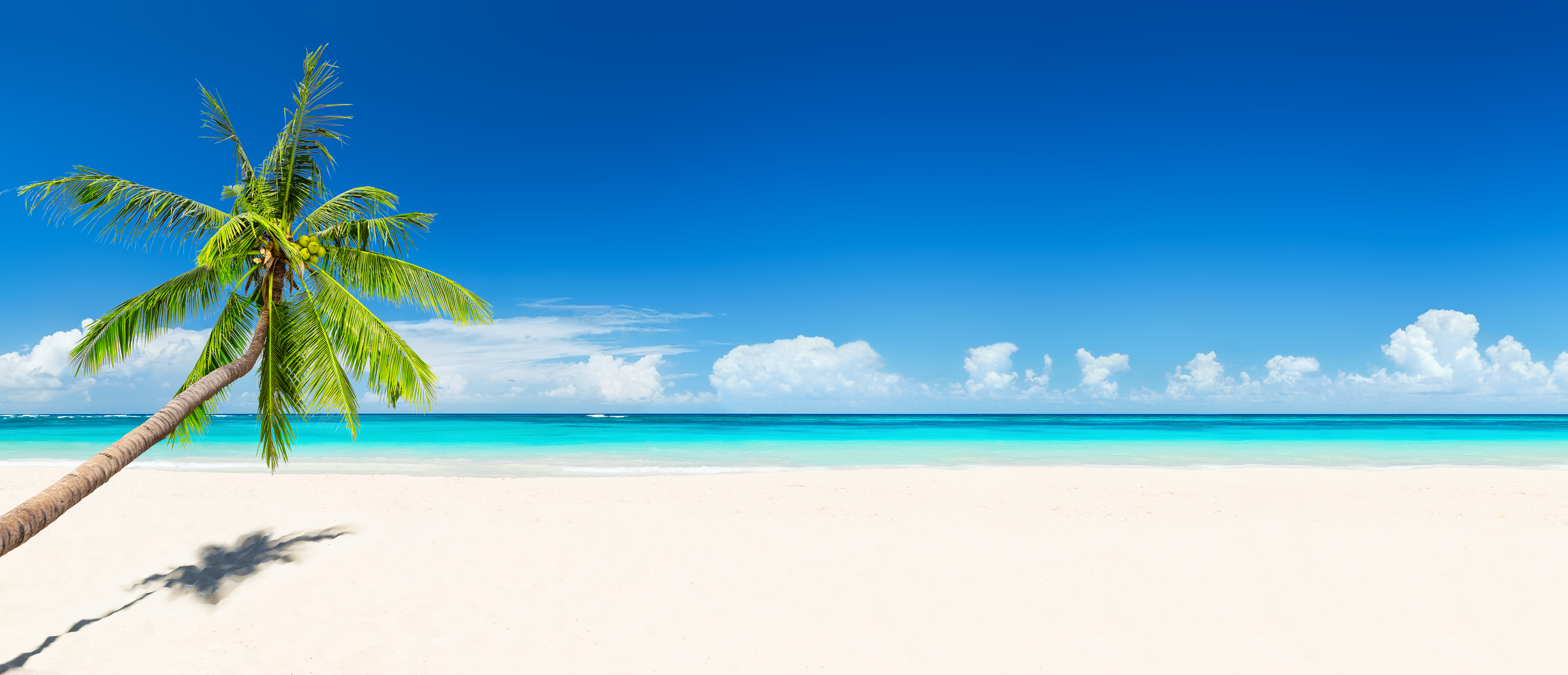
The beaches in this part of South Goa are unusually wide, with a long stretch of pale sand between the first dunes and the waterline — far broader than most coasts. The atmosphere is quiet and unhurried; beach hawkers are rare, leaving a lot of space for beach activities, walks, as well as boarding vessels for water activities. For most of the day the sand is almost empty, with only a few fishermen moving in and out with their boats and nets, giving the coastline a calm, working-waterfront character rather than a commercial one. Sunsets of course are usually spectacular.
(Overnight – Taj Exotica Goa)
Day 19: Goa.
The day begins with a drive inland from South Goa toward the spice-growing belt. The road passes small villages, paddy fields, and clusters of coconut palms; wayside shrines and local tea stalls dot the route and give a clear sense of daily life beyond the beaches.
Spice Plantation with Naturalist Walk
On arrival at the plantation, access is via a gently swaying suspension bridge over a broad, still pond. Trees and foliage encircle the water, and the main plantation buildings sit just beyond the far bank. The short crossing is part of the experience: reflections of palms, flowering shrubs, and the wooden walkway itself shimmer on the surface below.
A resident naturalist then leads a walking tour through the estate. Pepper vines climb host trees, cardamom plants grow in the shade, and nutmeg, cinnamon, clove, cacao, and other crops are identified in situ. Along the way, there is clear explanation of cultivation methods, harvesting, drying, and how these spices and herbs are used in regional kitchens and traditional remedies. Questions are encouraged, and it is easy to connect what is seen growing with familiar aromas and flavors from meals elsewhere on the journey.
A buffet lunch is served at the plantation.
Old Goa – Convents and Churches (UWHS)
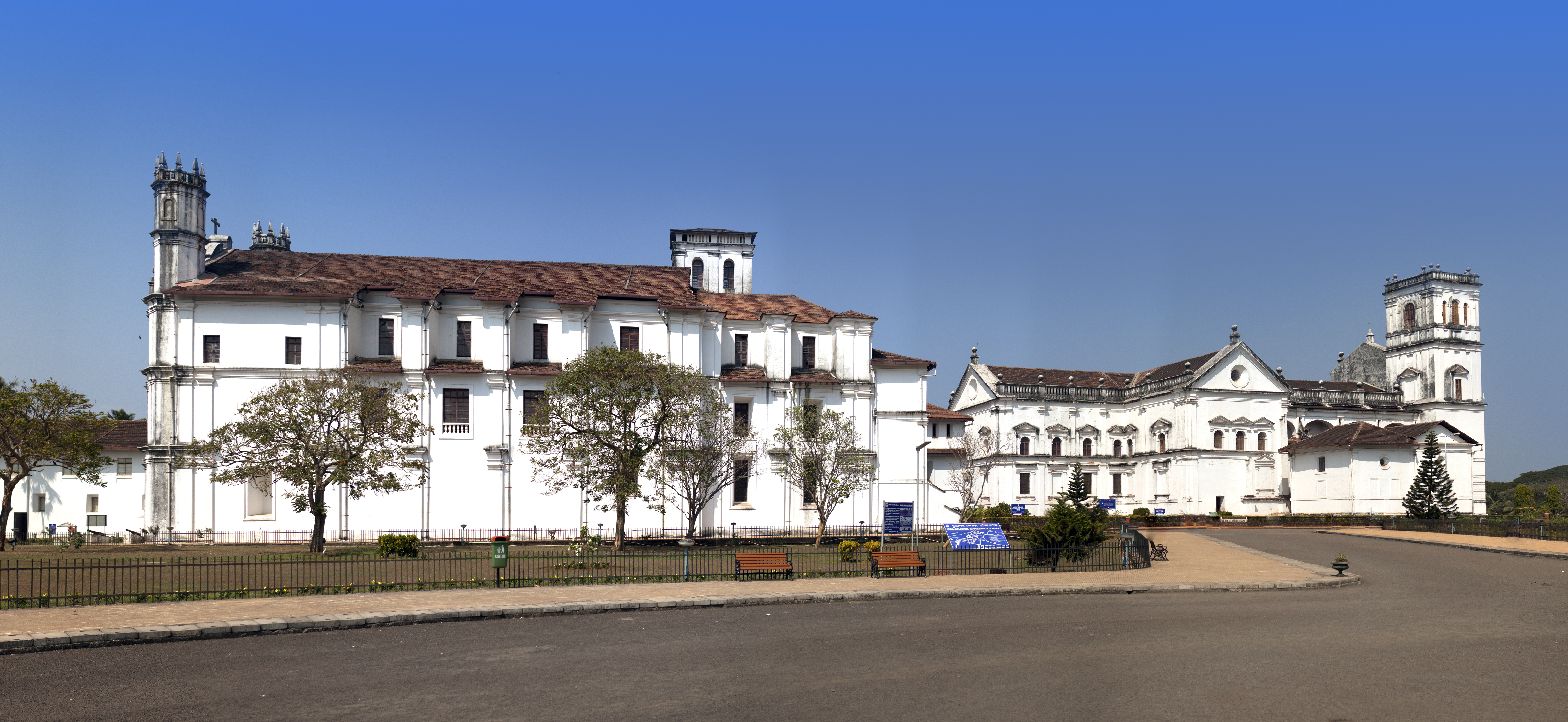
From the plantation, the drive continues to Old Goa, once the capital of Portuguese India and still marked by its dense cluster of churches and convents. The focus is on the UNESCO-listed ensemble:
- Basilica of Bom Jesus, where the baroque interior, side chapels, and relics illustrate the reach of Iberian Catholicism in Asia.
- Se Cathedral, with its broad façade, long nave, and chapels that show the gradual layering of history and patronage.
Depending on time and interest, additional nearby churches or convent buildings can be included. The guide provides context on how this small area functioned as the ecclesiastical center of a vast colonial network, and how the remaining structures reveal that past in their stones, artworks, and layout.
Fontainhas Heritage Quarter
Driving back toward Panjim, the final stop is Fontainhas, the old Latin Quarter. Here the streets narrow and climb gently, flanked by tightly packed houses with tiled roofs, wooden shutters, and balconies edged with wrought iron. Exteriors are painted in ochre, indigo, white, and soft pastels; small roadside shrines, corner chapels, and occasional wall niches add to the sense of a lived-in historic neighborhood.
The walk is unhurried and tailored to interest, with pauses at notable homes, local cafés, or small galleries if desired. Signage, street names, and architectural details reflect layers of Portuguese-era influence and contemporary Goan life existing side by side.
Return to South Goa
After the Fontainhas walk, the vehicle and chauffeur are waiting nearby for the drive back to the South Goa beach resort. Arrival is in the late afternoon or early evening, depending on the pace of touring.
(Overnight – Taj Exotica Goa)
Day 20: Goa - Goa Airport – Delhi.
You are at leisure this morning to enjoy your oceanfront resort, and its many activities and experiences. Additional days at the resort can be added upon request.
Please note that the vast majority of international flights depart from Indian airports either very late at night, or early in the morning. You are assisted with your check-out from your resort by noon and driven to the Goa Airport (about 2 hours), and assisted with your flight check-in.
Flight to Delhi. Upon arrival at Delhi Airport, you are greeted by the Oberoi Gurgaon staff and driven in a luxury car to your gorgeous hotel and assisted with your check-in.
(Overnight – Oberoi Gurgaon)
Optional International Departures from Goa. Please note that the direct international flights that depart from Goa Airport do so very early in the morning. Lodging near the airport can replace your Delhi Airport hotel and there will be a flight cost reduction for the flight to Delhi. Or you could add the stay at your beach resort and ask for a late night airport transfer.
Day 21: Oberoi Gurgaon – International Flight.
Full Fast Track Departure Services at Delhi Airport. Your Fast Track Rep escorts you through the complete departure process, including baggage collection with porterage, check-in, immigration, and security. Additional services, including airport hotel stays, can be added based on your international flight departure.
Our Services End at Delhi Airport.