
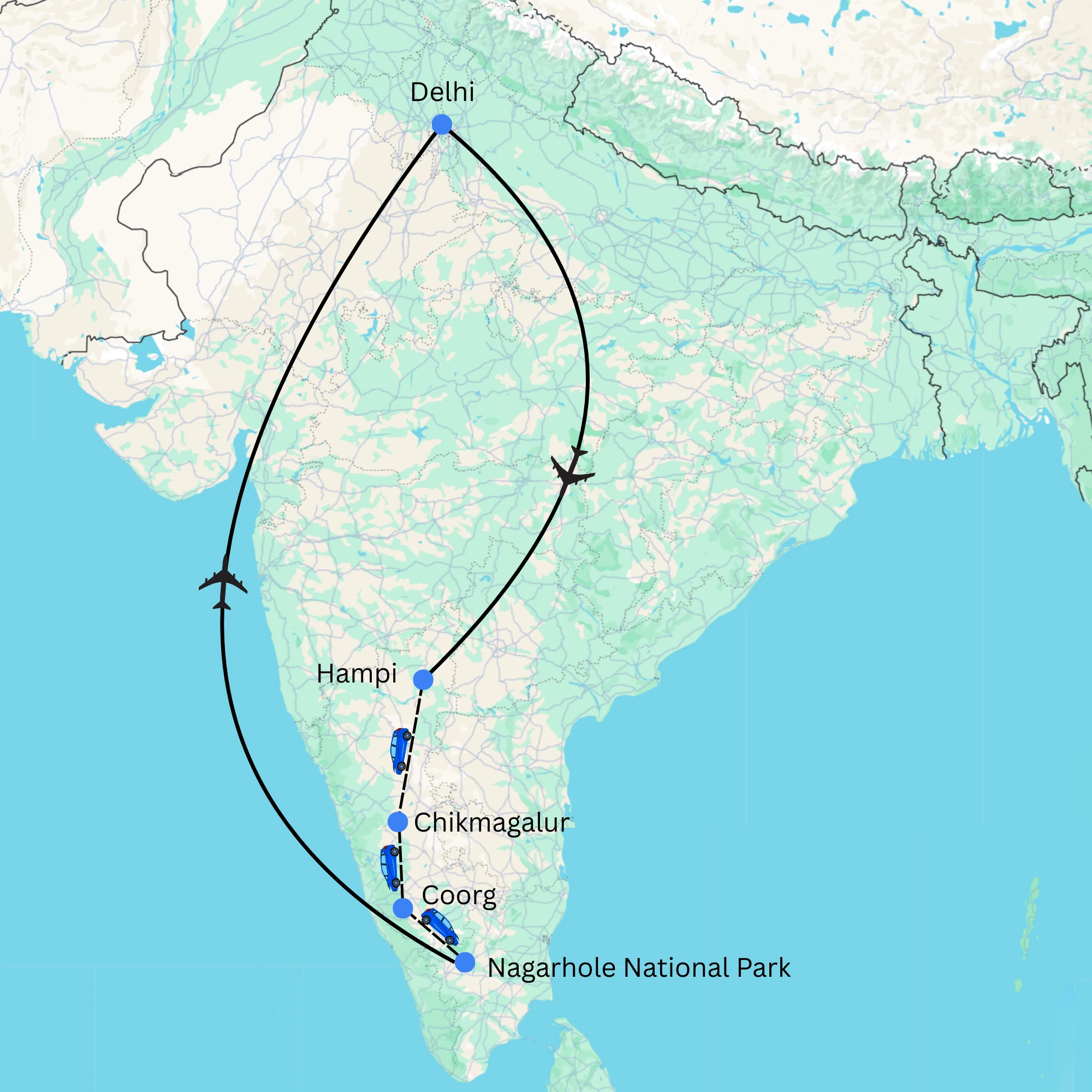
The Best of Karnataka Summer Journey
Activities & Experiences are Flexible at Each Destination
Day 1: Delhi Arrival Greeting & Transfer to Hotel.
Fast Track Arrival Services. Meet your assigned representative from Fast Track Arrival Services as you exit the jet bridge from your plane at Delhi Airport. You are privately escorted through the complete arrival process, including immigration, baggage claim, and customs. You will meet your Accompanying Guide and be driven to your luxury hotel not far from the airport.
We strongly recommend that our guests consider arriving a day earlier as this allows you to recuperate from jetlag and serves as insurance against international flight delays and cancellations. An additional night’s stay can be added at the time of reservation, including the option to add services for the afternoon.
Bangalore Arrival Option. If your arrival is in Bangalore, services and lodging can be provided there, with a reduction of flight costs due to the short flight to Hubli.(Overnight Delhi – Oberoi Gurgaon)
Day 2: Delhi – Hubli – Hampi. You are driven to the airport where you will be assisted with check-in for your direct flight to Hubli. Arrive at Hubli Airport and you are ushered to your vehicle and driven to your lodging next to the spectacular UNESCO World Heritage Site of Hampi.
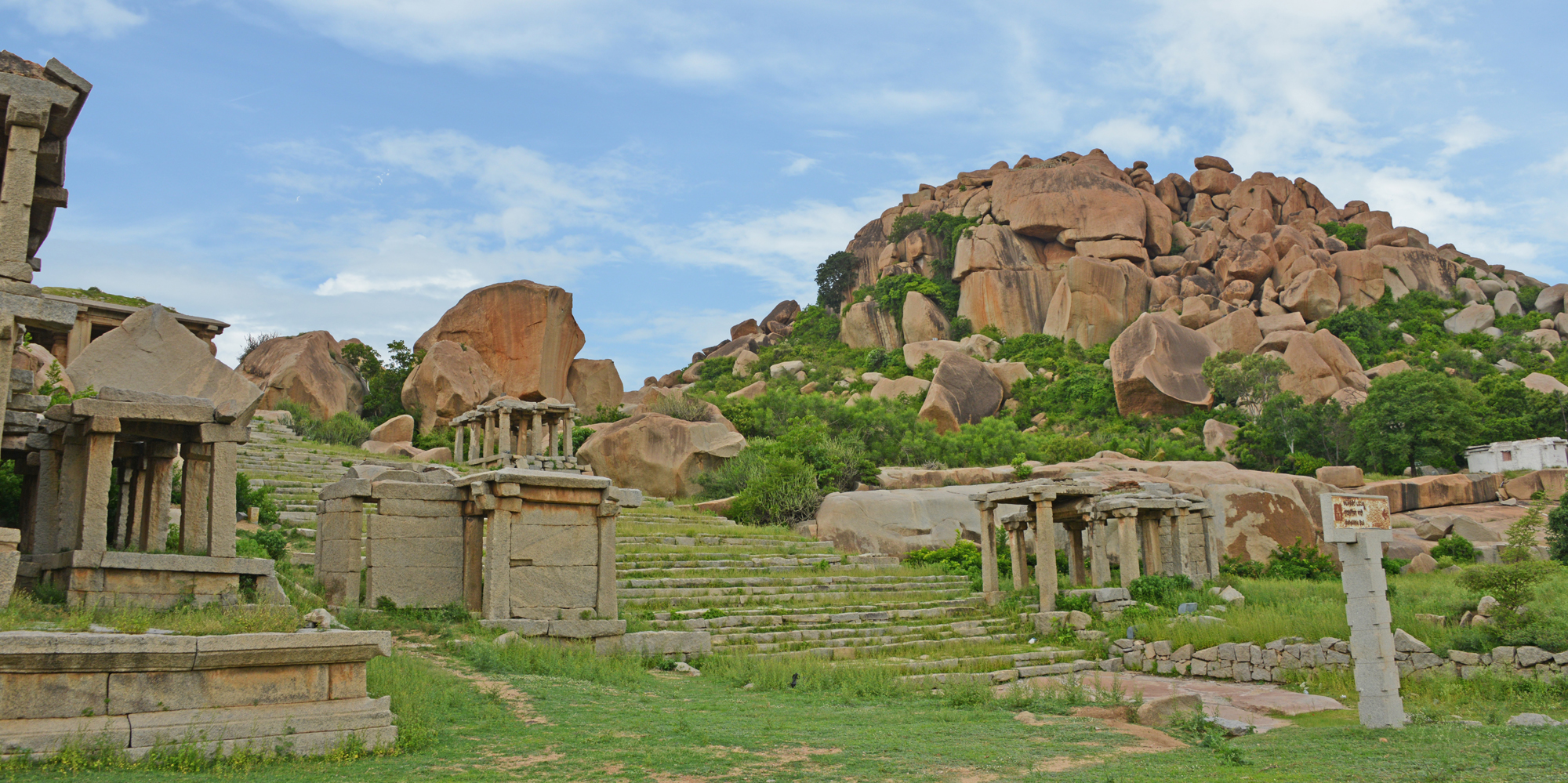
Upon arrival in the late afternoon, you are assisted with your check-in at your gorgeous suite at your exquisite resort. The Evolve Back Hampi is a palace-style resort inspired by the architecture and layout of the Vijayanagara Empire. Set amid canals and the rugged landscape of the Hampi Region near the ruins, the property is designed as a royal enclave, with arched corridors, courtyards, and pavilions that echo the grandeur of Hampi’s historic past while offering a calm and refined setting for your stay.
Dinner is included every night at your resort. For architecture, history, and scenery buffs we recommend adding an additional day in Hampi.
The Great Vijayanagar Empire: Traces of a two millennia old civilization have been found at Hampi, but the UNESCO World Heritage Group of Monuments at Hampi are a mere five to seven centuries old. Hampi was the last Capital of the Great Vijayanagar Empire, and the incredible monuments here are definitely matched by the amazing scenic landscape that is strewn with massive boulders. The landscape is surreal and breathtaking. Amidst hundreds of square kilometers of granite hills and boulders are the remains of a civilization that was unmatched in its heyday.
It is our opinion that Hampi, along with the Taj Mahal and the caves at Ajanta & Ellora, make up the most impressive attractions in a country that is overflowing with magnificent achievements of ancient and medieval civilizations. Two days of exploration at Hampi are a must to be able to really savor the amazing city and its granite monuments. Although there is evidence of a civilized society in this region from about 2000 years ago, what you will primarily experience are the remnants of the Vijayanagar Empire that thrived here from the 14th – 17th centuries, and the spectacular otherworldly landscapes.
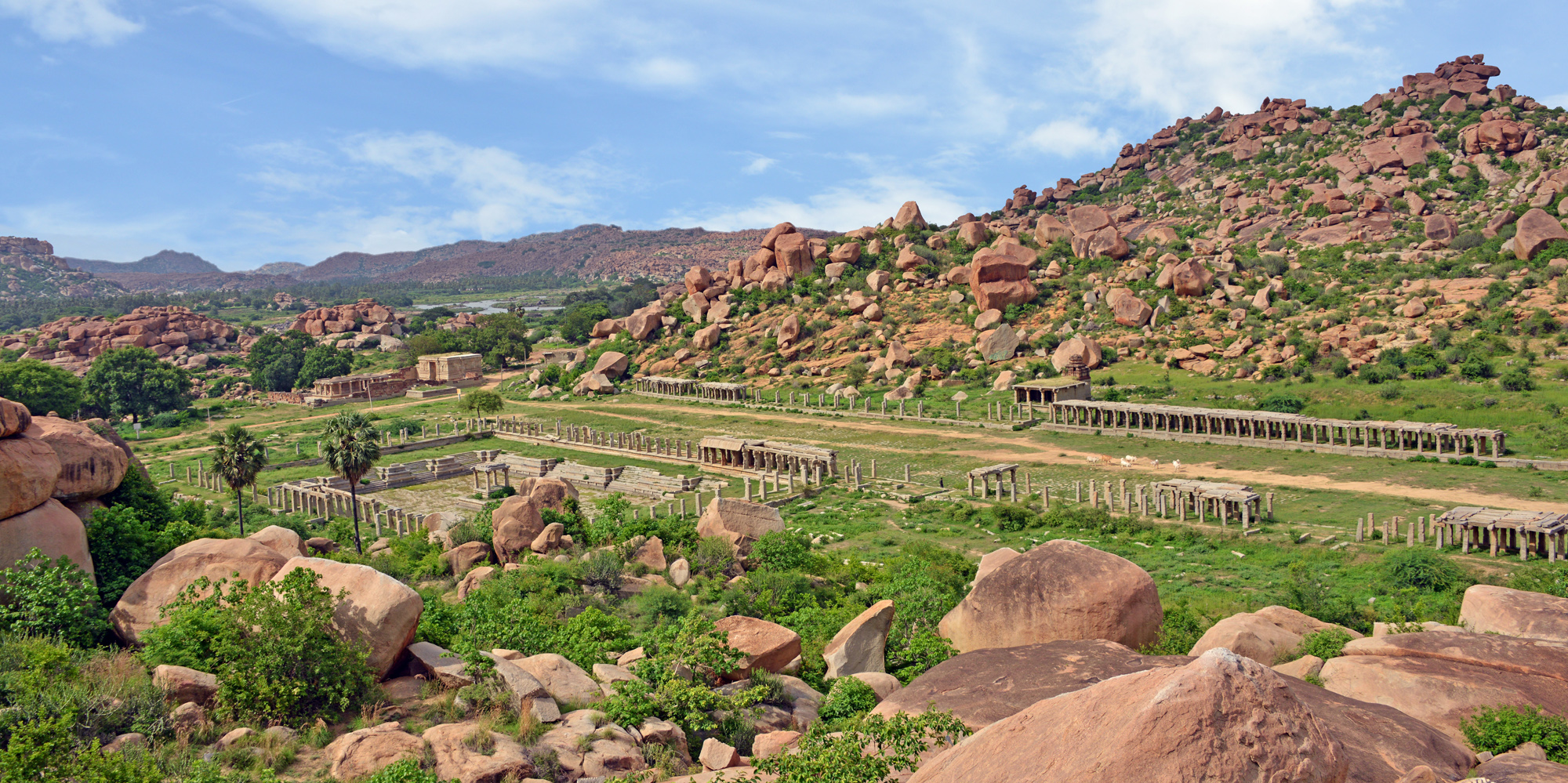
The estimates of the local population during that period range from over 500,000 to almost a million residents, and the city was said to have been surrounded by an army of about a million soldiers. The streets and bazaars (remnants of which are spread all over the 30 square kilometers of the Site) were so safe that traders sold precious stones in the open. The incredible stone aqueducts dot part of the landscape, as do various tanks and stepwells. Through this other worldly environment flows the picturesque Tungabhadra River, creating an image that a visitor will never forget.
(Overnight – Evolve Back Hampi)
Day 3: Hampi.
Today focuses on the central zones that define Hampi as a functioning imperial city: its living sacred core and the administrative/ceremonial precincts that supported court life.
Begin in the area around the Hampi Bazaar, once one of the city’s main arteries. The scale of the street itself is part of the experience—long sightlines, pavilion-like ruins, and the sense of a planned urban spine rather than a “market lane.” As you walk, your guide will point out how processions moved through this corridor, where trading and public life concentrated, and how the architecture was designed to handle crowds and ceremony as much as commerce.
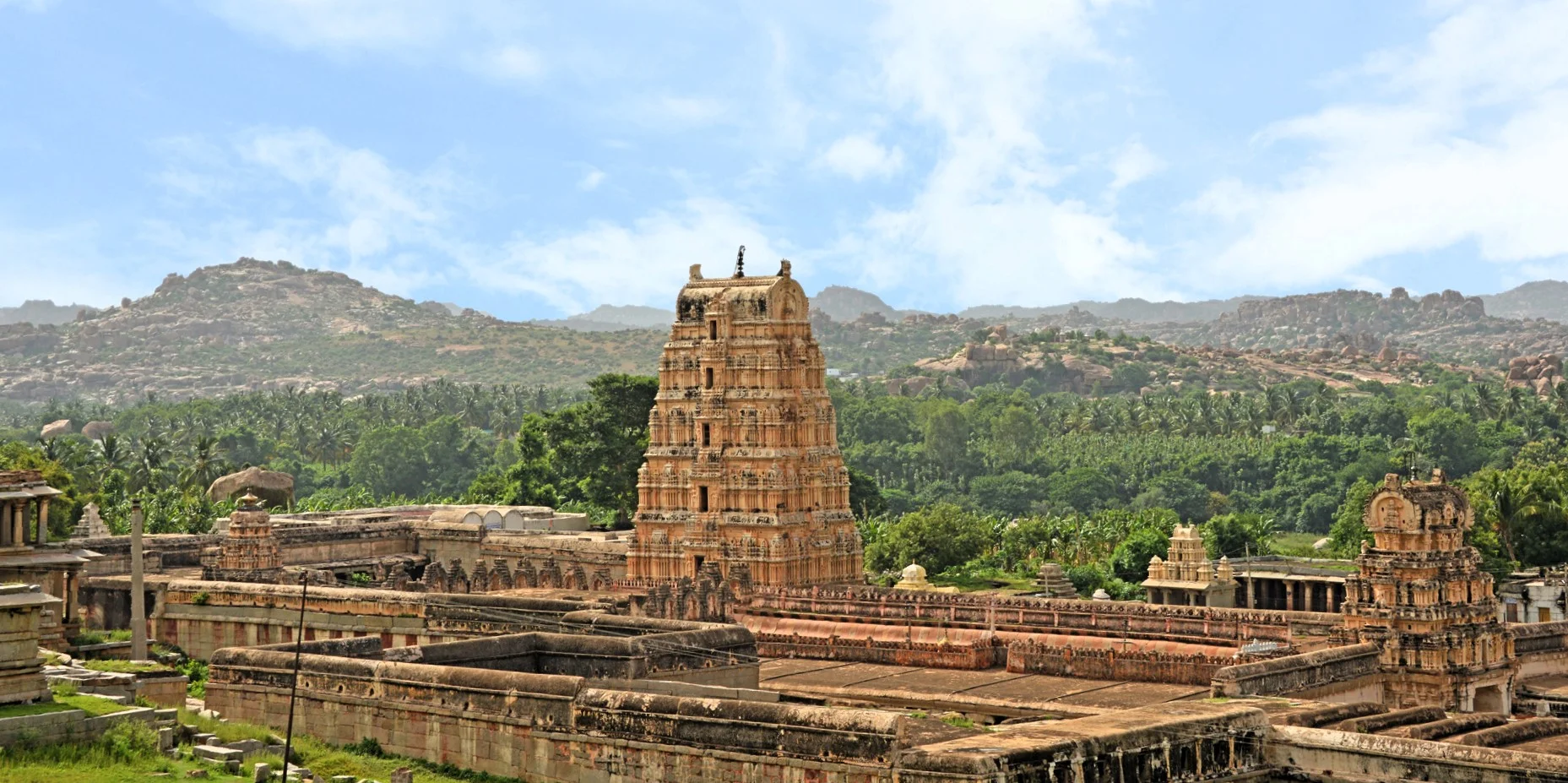
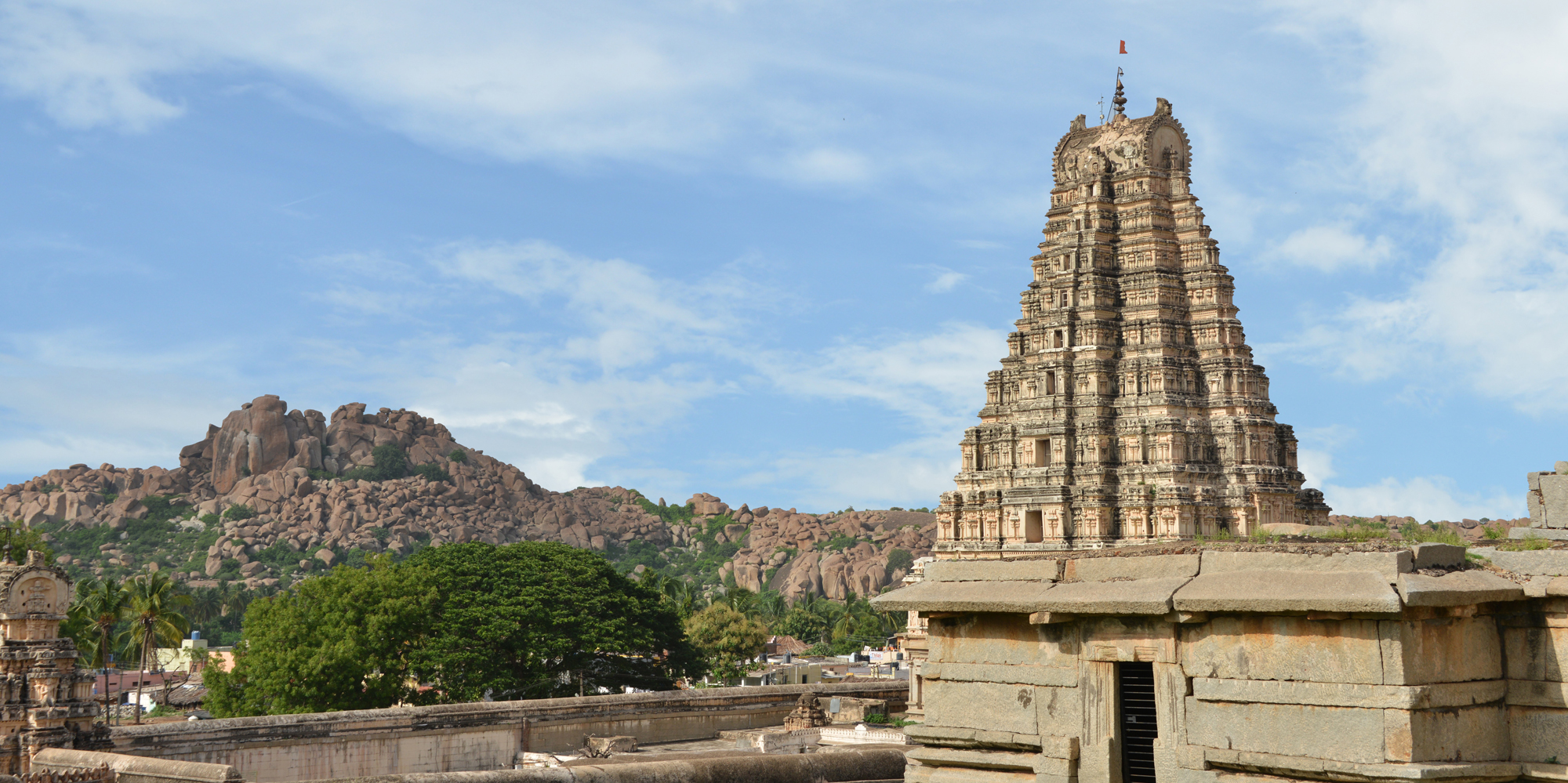
At the end of the bazaar, enter the Virupaksha Temple complex, the spiritual heart of Hampi and an active place of worship. Beyond the headline height of the gateway tower, the visit is about the living layout of the temple: successive gateways, courtyards, pillared halls, and shrines arranged to guide movement inward. You’ll notice how the temple is integrated with the surrounding town and bazaar, and how the scale of the built environment changes as you move from public space to sacred space.
From here, continue into the Royal Enclosure, where Hampi’s imperial character becomes tangible. This zone is not a single monument but a network of spaces—broad enclosures, foundations of former halls, ceremonial platforms, and water structures—laid out with a deliberate logic. Visit the Elephant Stables, notable not only for their symmetry but for how they sit within a larger service-and-court landscape. Nearby, see the House of Victory, associated with royal ceremony and state display.
Continue to key water and ritual structures within the royal precinct: the stepped Pushkarini Tank, where the geometry and craftsmanship of the stonework is as striking as the function, and the King’s Balance, a small but memorable structure tied to court ritual and donation ceremonies. Throughout this section, the experience is as much about the spaces between the monuments—walls, gateways, sightlines, and the way the city’s design frames what you see—as it is about any single building.
Return to the resort at any time during the above sightseeing for lunch and/or time at leisure.
(Overnight – Evolve Back Hampi)
Day 4: Hampi.
Today balances Hampi’s most celebrated monument complex with the natural landscape that makes the site so distinctive.
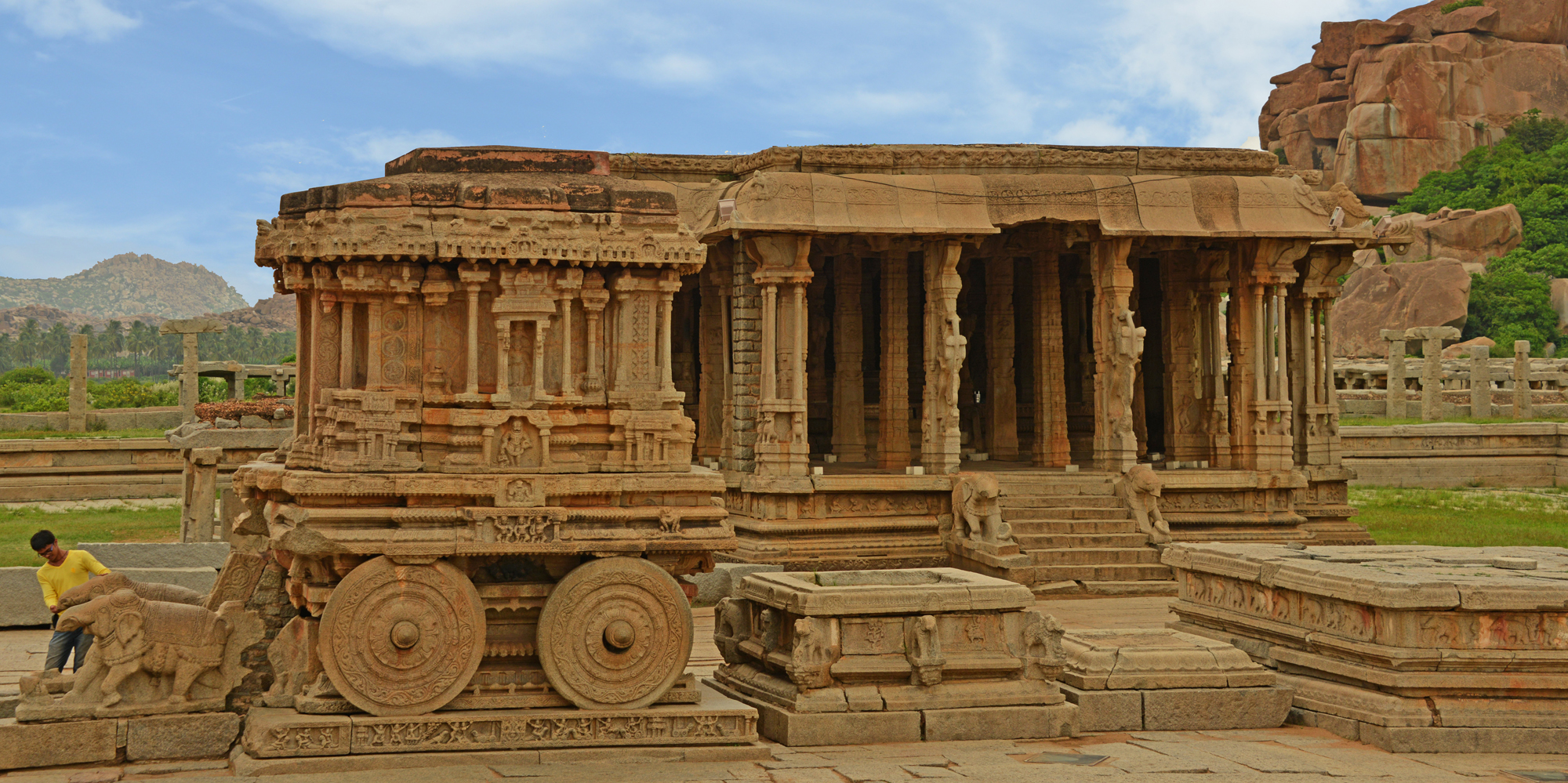
Visit the Vitthala Temple complex, often considered the architectural high point of Hampi. This is a large ensemble rather than a standalone temple, and the visit includes multiple courtyards, halls, and surrounding structures that show the sophistication of Vijayanagara planning. The celebrated Hall of Musical Pillars is part of a broader experience of craftsmanship—proportions, carvings, and the way sound and space work together in the mandapas. The iconic stone chariot is another focal point, but guests usually remember how much there is around it: subsidiary shrines, platforms, and the overall sense of a carefully composed sacred precinct.
After the monument visit, shift to the river side of Hampi for a different perspective. Spend time along the Tungabhadra River, where the landscape becomes the story: granite boulders smoothed by time, palms and cultivated edges, and the calm movement of water through the ruins. When conditions allow, take a coracle ride—a simple but distinctive experience that gives a fresh angle on Hampi’s terrain. From the water, the boulder hills and temple silhouettes feel less like “sites” and more like elements of a single continuous landscape.
Continue to Anegundi, a heritage village on the opposite bank, where the pace is slower and the focus shifts to continuity and daily life. Walk through lanes lined with traditional homes and small shrines, with occasional openings to river views and the surrounding hills. This is not about grand monuments; it’s about seeing the region as a lived-in cultural landscape, not only an archaeological one.
Return to the resort for lunch and a break.
In the later afternoon, head out for Hampi viewpoints, reached via walking paths across the granite terrain. These viewpoints are valuable because they reveal the city’s true scale—boulder fields stretching outward, the river cutting through the valley, and pockets of cultivated green that show how settlement has always been shaped by water and stone.
End with sunset, when the low angle of light sharpens the forms of the landscape and makes the entire valley feel more dimensional before returning to the resort.
(Overnight – Evolve Back Hampi)
Day 5: Hampi – Chikmagalur.
After breakfast, check out of your resort and begin the drive toward Chikmagalur, with the scenery gradually shifting from Hampi’s granite boulder landscape into greener, more undulating country. As you continue, you pass through agricultural belts, small towns and villages, and broad stretches of cultivated land, before the terrain rises into the Western Ghats—a UNESCO World Heritage Site and one of India’s most visually striking natural regions. The approach into the hills brings cooler air, thicker vegetation, and a landscape shaped by streams, wooded slopes, and rural settlements set among plantations.
Arrive in Chikmagalur in the early afternoon and break for lunch before checking in to The Serai Chikmagalur, set within a working coffee plantation in the hills. The property is spread across gently sloping terrain, with buildings and pathways integrated into the plantation rather than imposed upon it. Coffee plants, shade trees, and open views across the estate define the setting, creating a sense of space and quiet that feels closely tied to the surrounding landscape.
(Overnight – The Serai Chikmagalur)
Day 6: Chikmagalur. Today you will experience guided visits to both the amazing Chennakeshava temple (dedicated to Lord Vishnu) at Belur, and the Hoysaleswara temple (dedicated to Lord Shiva) in Halebidu.
India is a land where incredible stone architecture and sculpture abound, more so than any nation on this planet. There are UNESCO World Heritage Sites such as Ajanta & Ellora, Hampi, Khajuraho, the Sun Temple, and literally scores of others that, if they were located in most other nations, would be that country’s most valued ancient site.
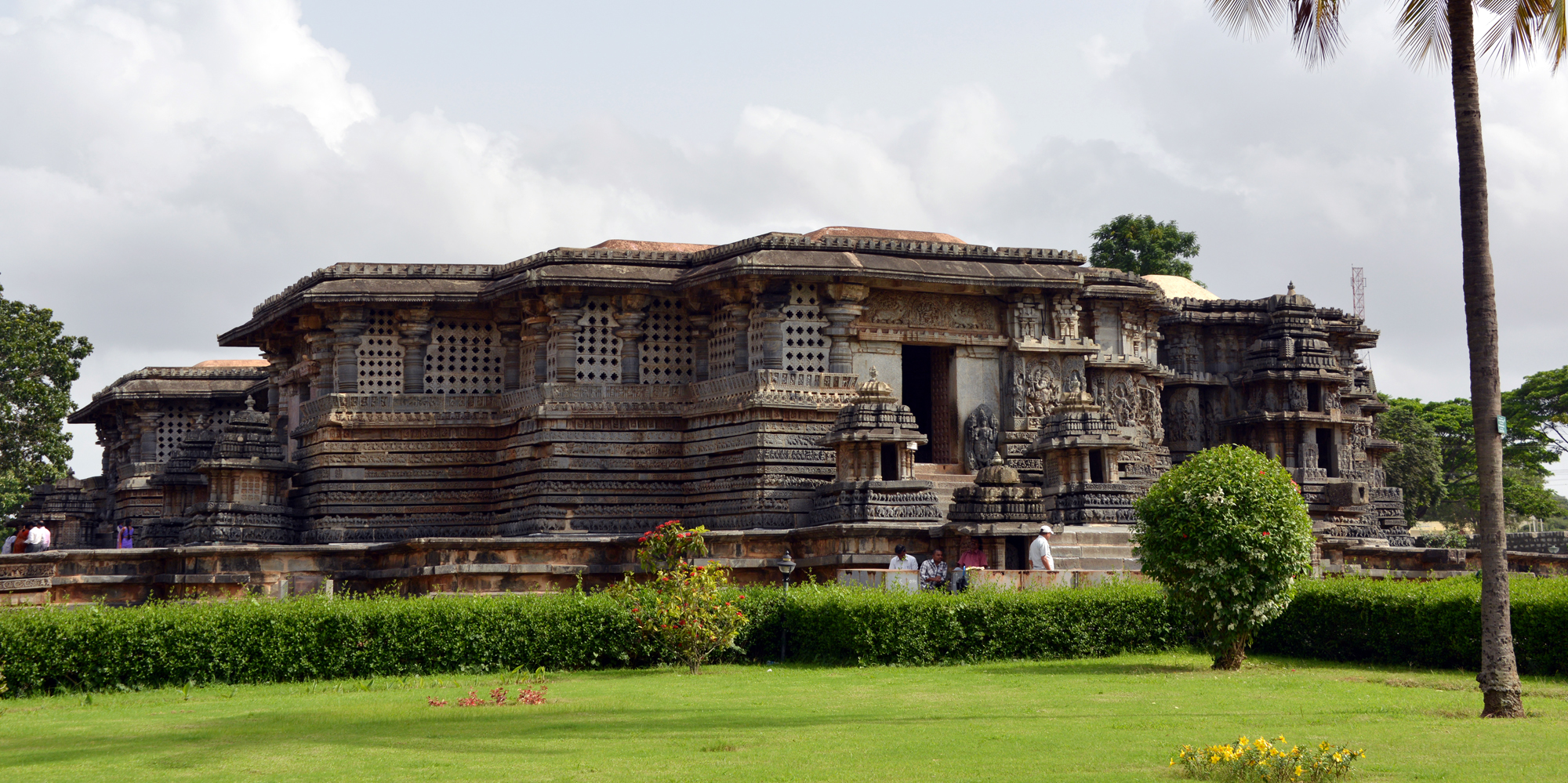
Belur (UWHS). The temples at Belur and Halebidu have the most amazingly intricate carvings of all the sites in India. Because these artists worked in soapstone, a much softer stone than the traditional granite or other hard rock used in places like Hampi, Ajanta & Ellora, or Khajuraho, they were able to achieve a level of intricate detail that is unrivalled on this planet. No written words or pictures can describe the achievements that were made by these artists about 900 years ago – you have to personally experience the temples with the help of an Easy Tours’ guide, to be able to truly appreciate the intricacy and the incredible volume of creativity at Belur. The temple took many generations of skilled sculptors well over a hundred years to create.
Halebidu (UWHS). After lunch you will drive about 45 minutes and your guide will continue to astound you as he explains the intricate details of the carvings that adorn the surface of the Hoysaleswara Temple. This temple rivals or exceeds the incredible temple at Belur in its intricate carvings and sheer volume of work. The stones form a canvas depicting Hindu Deities, epic stories from the Mahabharata, mythological creatures as well as more recognizable flora and fauna. Of the thousands of incredibly detailed carvings, no two are alike and each one is a masterpiece on its own.
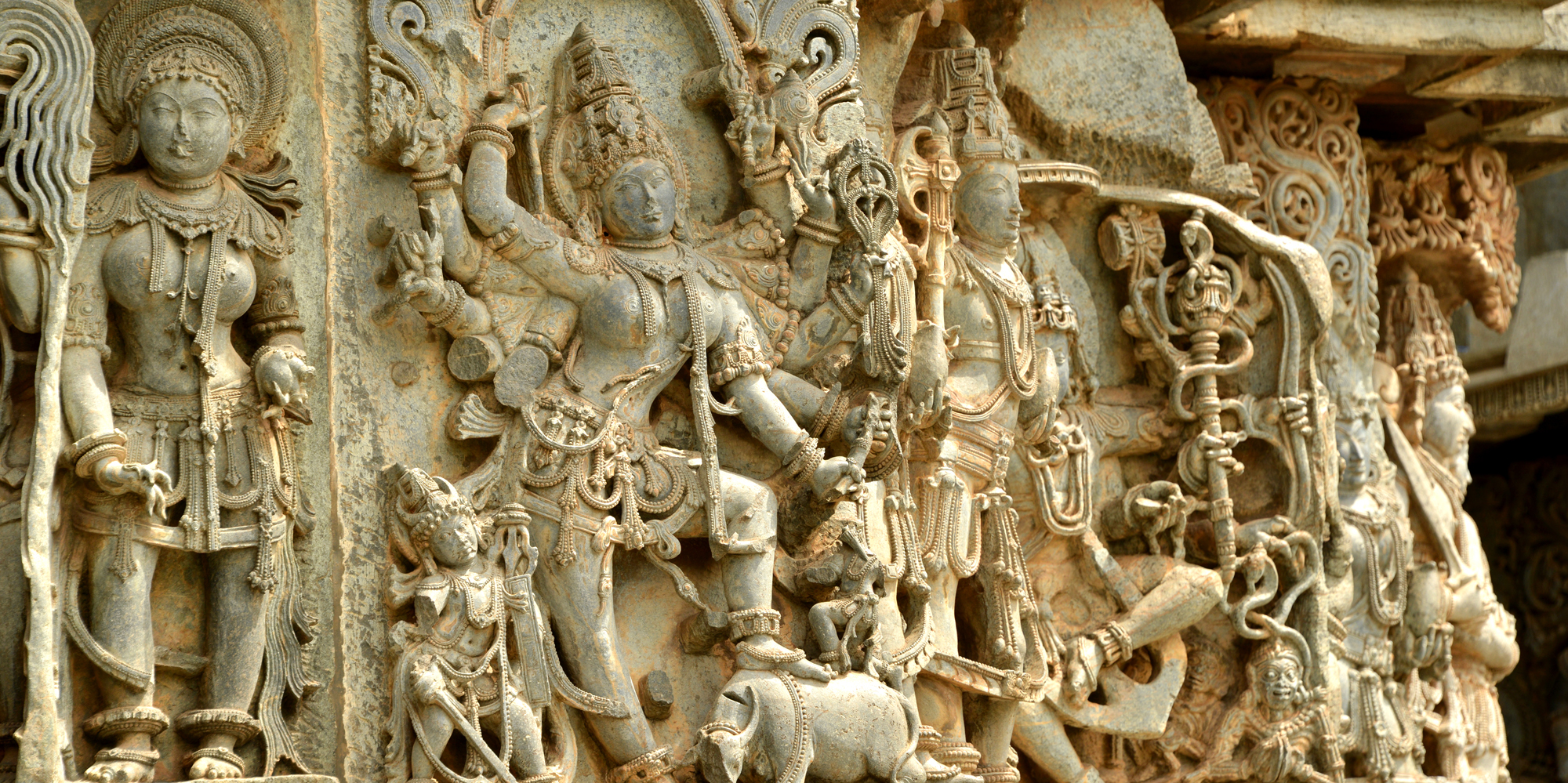
Again, just like in Belur, not an inch of the surface was left untouched, and you will be unable to comprehend how the sculptors were able to carve such incredible detail in even the least accessible crevices and nooks of the structure. Also built over 900 years ago, work on the temple was stopped after 86 years and hence it is considered an unfinished temple complex. Return to your resort after your tour.(Overnight – The Serai Chikmagalur)
Day 7: Chikmagalur – Coorg. At any point after breakfast, as long as it is before noon, you will join your Guide and your chauffeur for a gorgeous drive on your way to the Coorg Region. We encourage you to stop frequently on this journey so as to enjoy the incredible vistas that surround you. Arrive at your boutique luxury nature resort near Madikeri and you are assisted with your check-in. Coorg is situated in the eastern slopes of the Western Ghats of Karnataka and the incomparable scenery of lush green valleys; coffee plantations & teak wood forests have to be experienced to be believed. It is the birthplace of the River Cauvery and has much to offer every visitor. Mist laden hills, lush jungles, acres of seemingly endless tea and coffee plantations, orange groves, and breathtaking views are just some of Coorg’s attractions.
Your breathtaking resort is located in the hills at an elevation of 3500 feet, in the middle of a 180-acre virgin rainforest, and it was constructed without damaging the invaluable environment it is in. Your beautiful large villa has wonderful views of the mist laden jungle and there are multiple walks and activities available within the resort, along with a great spa. The temperature-controlled infinity pool is built on a bluff overlooking a gorgeous valley with views that have to be seen to be believed.(Overnight – Taj Vivanta Coorg)
Day 8: Coorg.
On this day you are at leisure to explore with your Guide and chauffeur driven vehicle, both available to you from 10 am until 6 pm. This day is ideal for experiencing Coorg’s countryside, small towns, and everyday life at a relaxed pace.
Many guests enjoy driving through Coorg’s rolling hills and coffee plantation countryside, with opportunities for scenic stops and short walks to take in the spectacular landscape. The routes wind through plantation-covered slopes, forest patches, and open viewpoints, offering a clear sense of how agriculture, terrain, and scenery come together in this region.
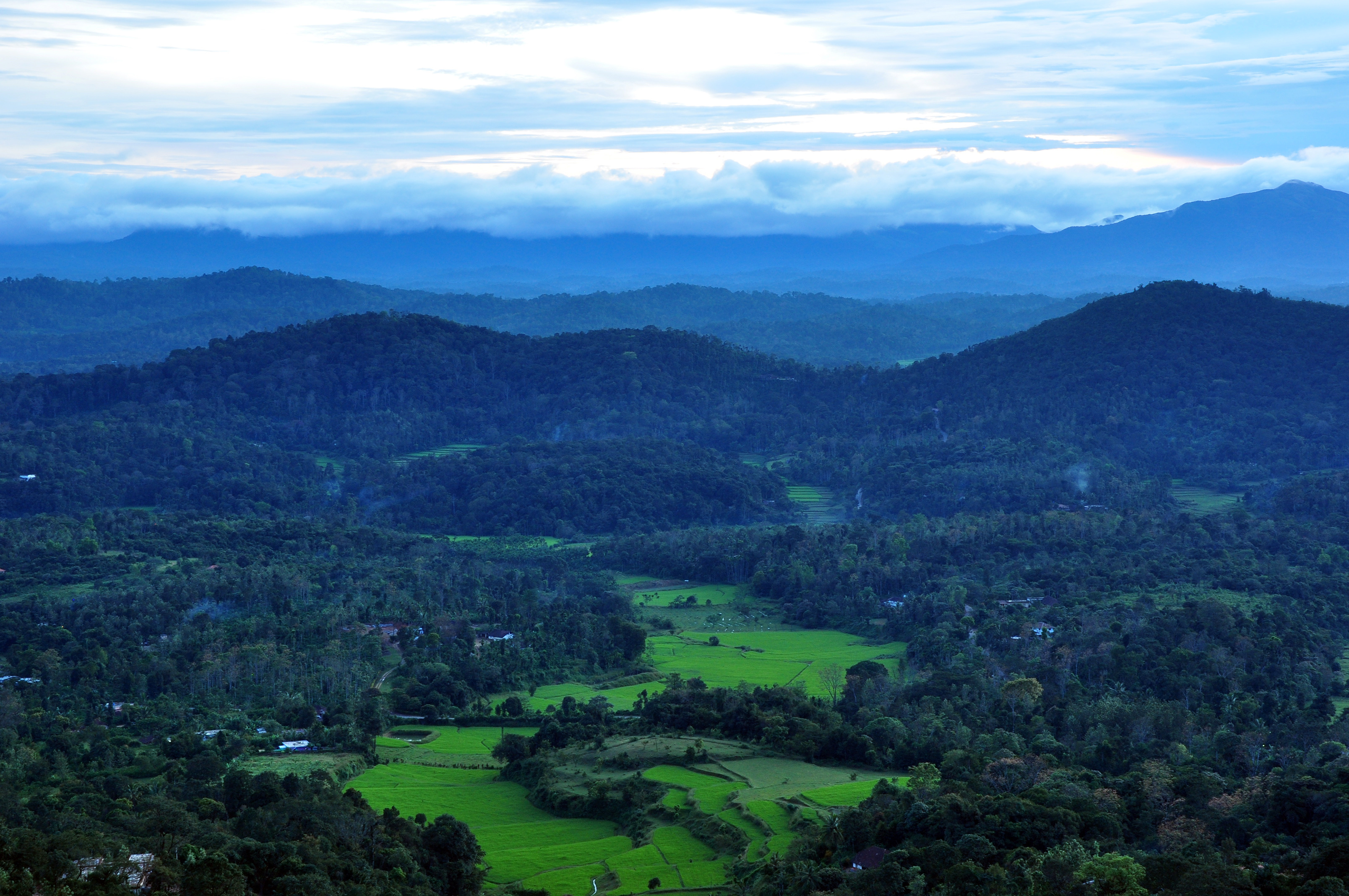
You may also choose to include village visits, stopping in small rural communities for brief walks through quiet lanes. These visits provide a grounded look at local life—homes set among greenery, small temples and shrines, roadside shops, and the rhythms of agricultural communities that define this part of Karnataka.
Another option is a visit to the hill station of Madikeri, the administrative center of Coorg. The town is compact and lively, primarily geared toward Indian visitors, with busy streets, local markets, and everyday commerce. Walking through the central areas offers insight into daily life, with shops selling coffee, spices, clothing, household goods, and regional snacks, along with viewpoints that look out toward the surrounding hills.
Your Guide will help shape the day based on your interests, combining countryside drives, plantation scenery, village stops, and time in town as you prefer.
(Overnight – Taj Vivanta Coorg)
Day 9: Coorg – Nagarhole National Park
Check out of your resort in Coorg in the morning and drive toward Nagarhole National Park, one of India’s premier wildlife sanctuaries. The drive moves through classic Karnataka countryside—lush farmland and small villages, pockets of plantation country, and occasional granite outcrops and boulder-strewn hills that are distinctive to this region—before the scenery gradually thickens into forest as you approach the park.
Arrive at your luxury wildlife lodge near the park boundary and break for lunch before checking in. All three meals are included during your stay at Nagarhole.
About Nagarhole / Kabini
Nagarhole National Park, including the Kabini region, forms part of the Nilgiri Biosphere Reserve, a UNESCO World Heritage Site that links several of South India’s most important protected forests into a single, ecologically continuous landscape. Located near the tropics, Nagarhole is far lusher than many of North India’s well-known sanctuaries, with moist deciduous forest, tall teak and bamboo, open meadows, and river-fed corridors that support an unusually rich concentration of wildlife.
Kabini–Nagarhole performs exceptionally well in both winter and summer. During the winter months, overall wildlife viewing conditions are excellent. Cooler temperatures make extended jeep and boat safaris comfortable, and mammal movement remains steady throughout the park. The Kabini River and surrounding wetlands also attract resident and migratory birdlife, adding a strong avian component without detracting from the park’s primary wildlife focus.
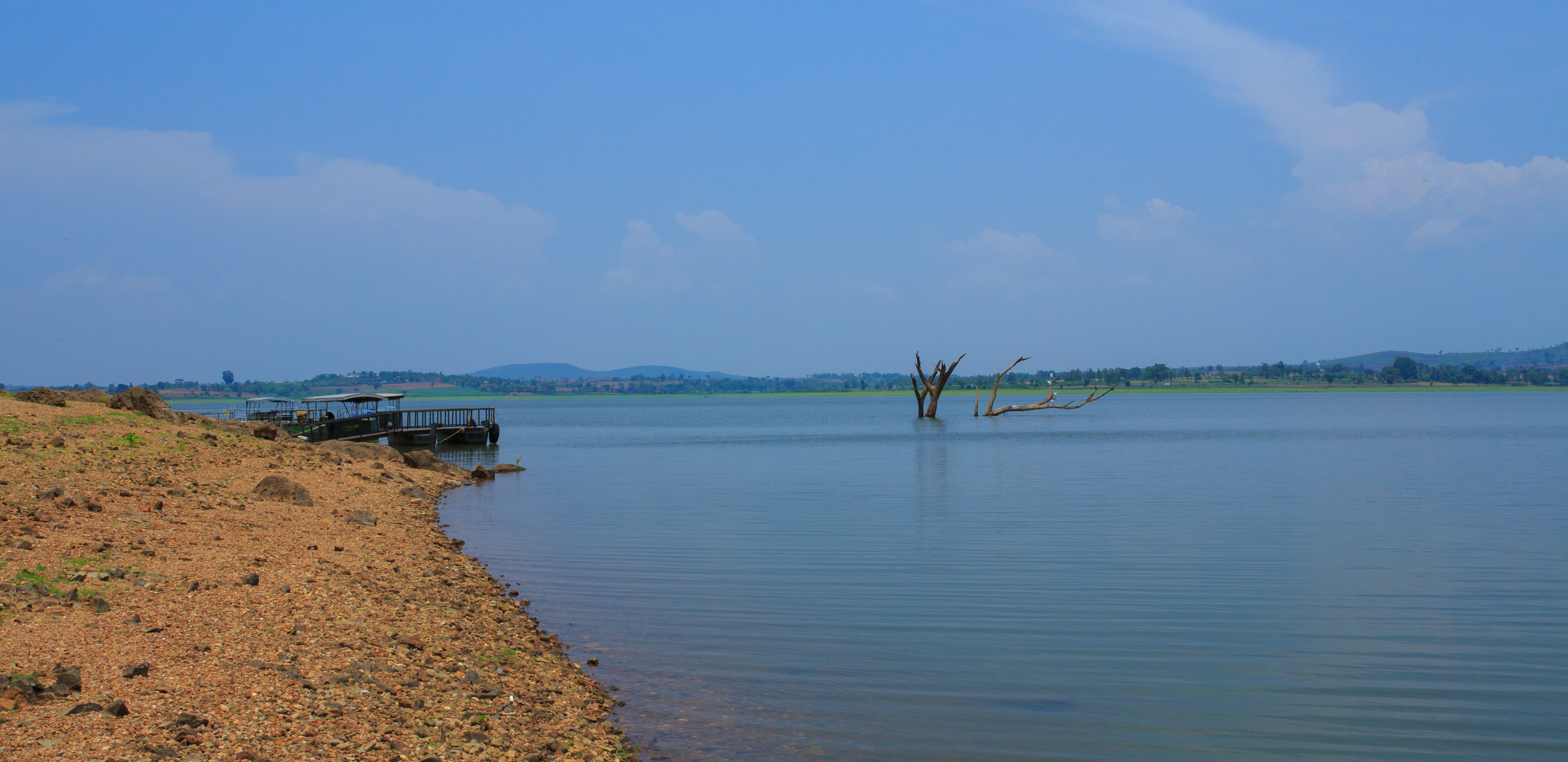
In the summer, when most North Indian parks are closed, Nagarhole remains open and often becomes even more productive. As seasonal water sources dry up elsewhere, animals concentrate around the Kabini River and remaining water bodies, naturally increasing visibility. Vegetation thins during this period, making movement easier to detect along forest tracks and riverbanks. Elephant activity near water is especially pronounced during the summer months.
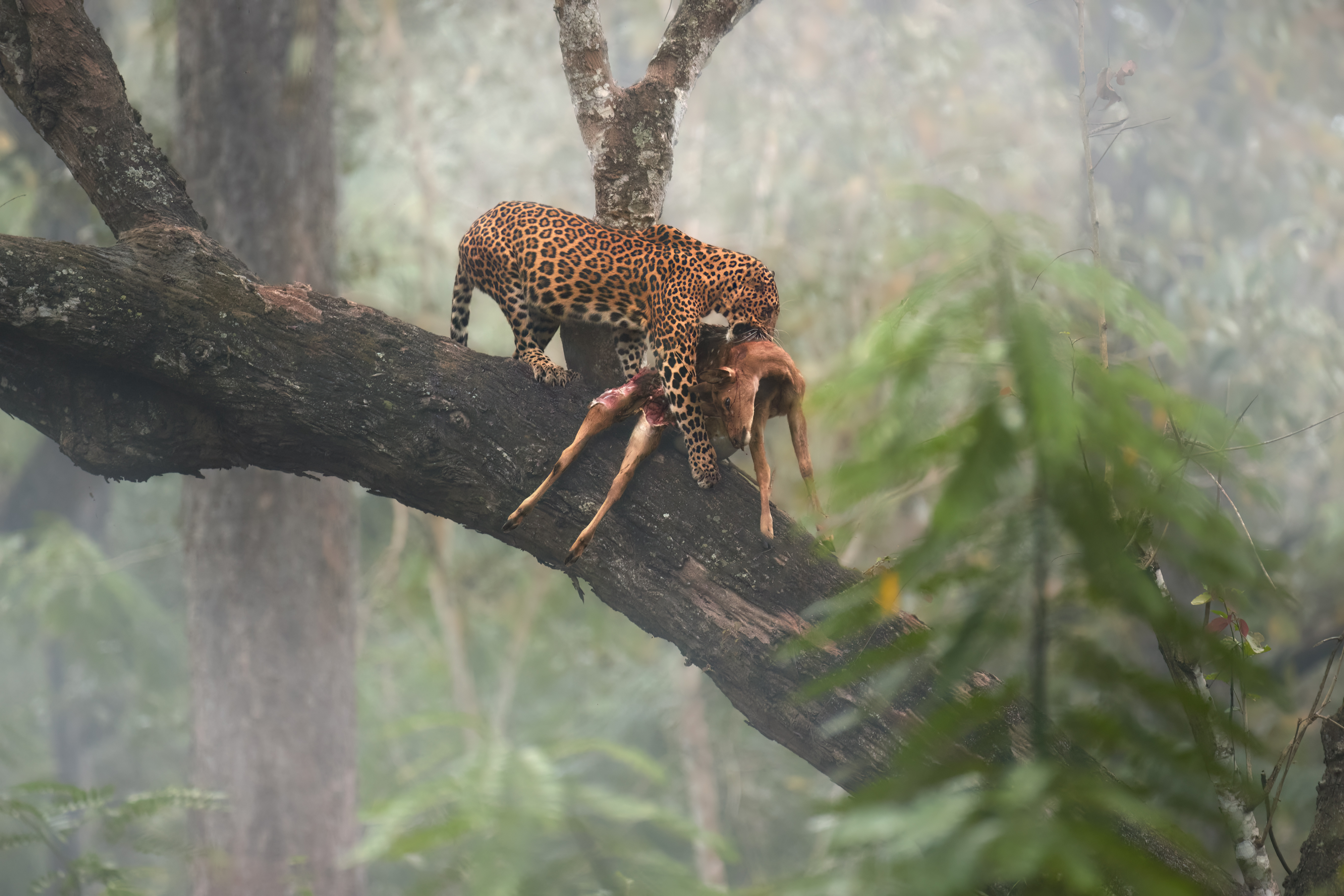
Nagarhole is best known for its tiger population, with one of the stronger densities found in South India, and the park offers excellent habitat and conditions for tigers. One of the most compelling experiences here is observing wild elephants. Nagarhole–Kabini is among the best places in India to encounter elephants in their natural environment—whether a solitary bull, a small family group moving quietly through the forest, or larger herds gathering near water or crossing open clearings.
The park also supports leopards, sloth bears, gaur, sambar, spotted deer, wild boar, and a wide variety of birdlife. Marsh crocodiles (muggers) are a regular presence near rivers and water crossings, often seen basking openly or resting partially submerged along the shoreline, and turtles and other basking reptiles are frequently encountered as well.
In the afternoon, head out for your first jeep safari into Nagarhole National Park. This initial safari provides an excellent introduction to the terrain, wildlife patterns, and scale of the forest before returning to the lodge as the forest settles into evening.
(Overnight – Evolve Back Kabini)
Day 10: Nagarhole National Park
Begin the day with an early morning jeep safari, when temperatures are cooler and the forest is at its most active. Morning light filters through the canopy, illuminating forest tracks, open glades, and water crossings. This safari allows time to explore different sections of the park and observe how wildlife uses the landscape in the early hours—moving between cover and open areas, feeding, and approaching water before the day warms.
Return to the lodge for breakfast and time at leisure, with the opportunity to relax and enjoy the forest setting.
In the afternoon, set out for a boat safari on the Kabini River, which offers a distinctly different way of experiencing Nagarhole. From the water, the landscape opens up into broad stretches of river, forested banks, quiet inlets, and sandbars that attract continuous activity. The slow pace allows for extended observation rather than fleeting sightings.
This is the best setting to observe marsh crocodiles (muggers), which are frequently seen basking openly on banks and sandbars or resting motionless just below the surface near the shoreline, often allowing prolonged views at close range. The river also supports turtles and other basking reptiles, adding to the sense of wildlife concentrated along the water’s edge.
The Kabini River is especially rich in avian life. Water birds are active along sandbanks and shallow edges, while others move between the river and surrounding forest. During the winter months, the river attracts an increased number of migratory species, adding further diversity and density to the birdlife. Raptors are often seen scanning overhead, and the open setting makes it easier to observe flight patterns and feeding behavior.
As the cruise concludes, sunset settles over the river. The sun drops behind the forested banks, shadows lengthen across the water, and activity along the shoreline subtly shifts as birds settle and larger animals move back into cover. The combination of fading light, still water, and silhouettes along the river creates a distinctive late-afternoon atmosphere as you return to the lodge.
(Overnight – Evolve Back Kabini)
Day 11: Nagarhole – Bangalore Airport – Flight to Delhi/Mumbai/International Flight
After breakfast, check out of your lodge at Nagarhole and begin the drive toward Mysore, leaving the forested landscape behind as the road transitions into cultivated countryside and historic towns. The change in scenery is gradual, moving from protected wilderness into a more settled and culturally layered part of Karnataka.
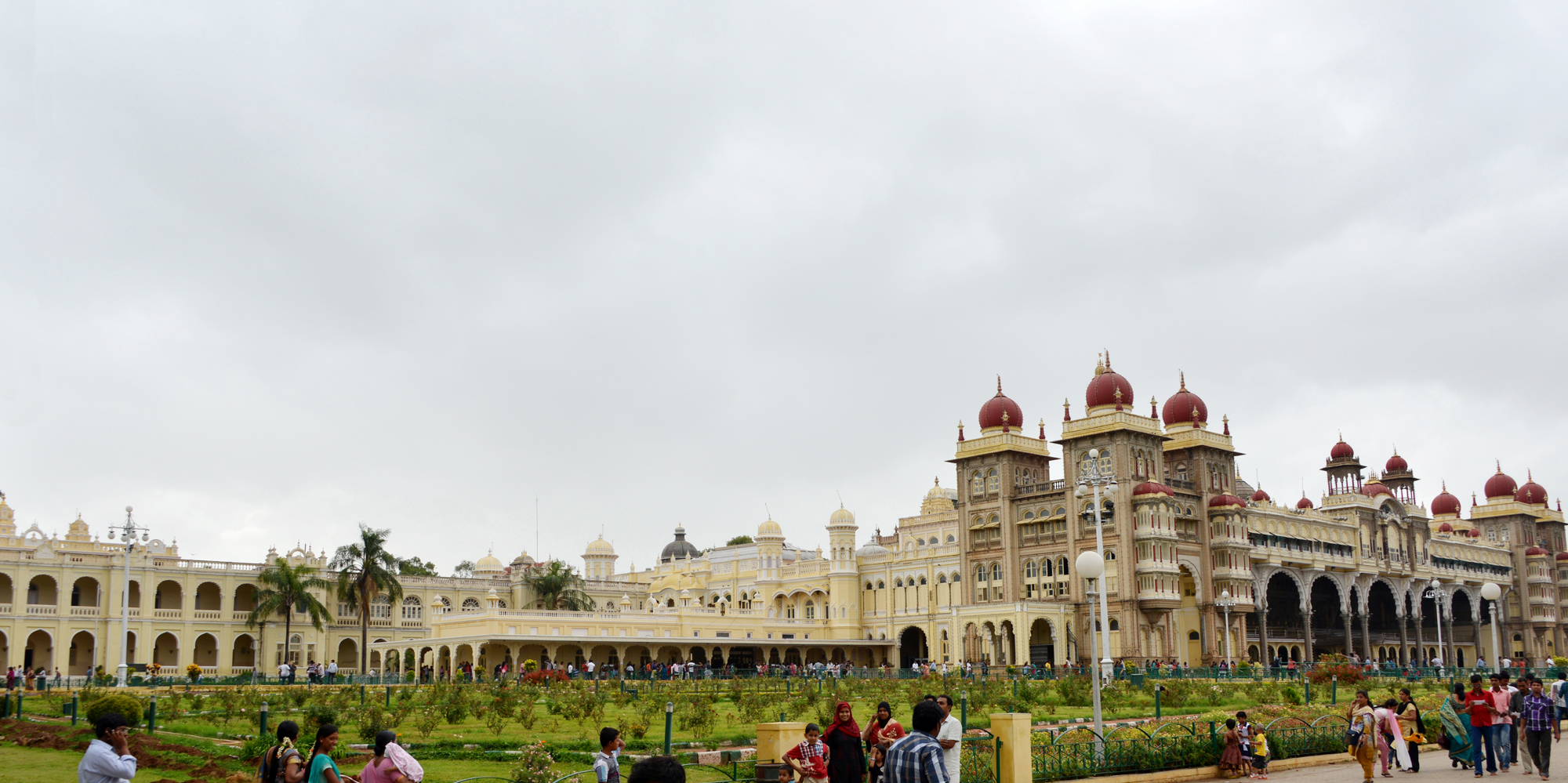
Upon arrival in Mysore, enjoy a guided visit to the Mysore Palace, one of India’s most celebrated royal residences and a defining landmark of the former Kingdom of Mysore. Built in the Indo-Saracenic style, the palace is grand in scale and richly detailed throughout. Its architecture features domes, arches, towers, and colonnades, while the interiors are notable for their vivid colors, carved woodwork, stained glass, mirrored ceilings, painted panels, and intricate inlay. The ceremonial halls and courtyards reflect the wealth, authority, and artistic ambition of the Wodeyar rulers.
As you move through the palace, your guide will explain the history of the Wodeyar dynasty, the role of the palace in governance and royal ceremony, and the blend of Indian and European influences visible in its design and decoration.
Break for lunch after the palace visit. Following lunch, continue the drive to Bangalore Airport for your onward flight to Delhi. Changes and Additional services, including airport lodging and transfers in Bangalore or Delhi can be arranged once flight details are confirmed.
Fast Track Departure. Upon arriving at Delhi, you will be introduced to your Fast Track Services Representative who will escort you through the full departure check-in, security, and immigration processes. Your guide bids you farewell here.
Bangalore Departure Option. If your international flight departs from Bangalore, Fast Track can be provided here, along with a reduction for the flight cost.
Our services end at Delhi Airport.